Experts

Mar. 25th, 2022 02:54 pm
pjthompson: quotes (quotei)
Random quote of the day:

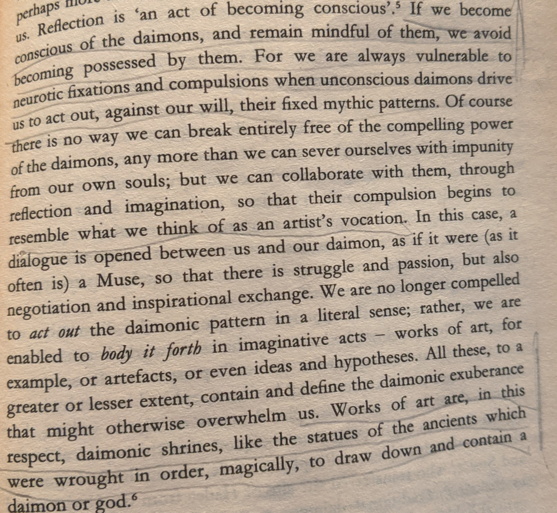
“We have come to expect explanations whenever anything mysterious occurs, and there was always an “expert” willing to oblige. No matter how ludicrous the expert’s explanation, we are usually satisfied because we would rather be assured that the mystery has been solved then give it a moment’s thought.”

—Patrick Harpur, Daimonic Reality


Disclaimer: The views expressed in this random quote of the day do not necessarily reflect the views of the poster, her immediate family, Desus and Mero, Beyoncé, or the Marine Corps Marching Band. They do, however, sometimes reflect the views of the Cottingley Fairies.
pjthompson: (Default)


I’m not sure this is a genuine case of high strangeness. It’s easy to dismiss—and, in fact, I dismissed it almost as soon as it happened. But it is strange.

When my mother was still alive, I had to get up early every Saturday morning to take her to dialysis. It was a chore to get up early on Saturday, but at least I got to sleep in until 6:45 instead of 5:15 as I did on weekday mornings for work. And it meant I had 3 hours of precious me time when I didn’t have to worry about caregiving. I loved my mother, didn’t begrudge the giving of care, but during the week the only time I got alone was driving to and from work (and, I’m sorry, but that doesn’t really count as me time).

On this particular Saturday, I had just left my mother off at dialysis and was feeling good anticipating the free time. The quickest way between our house in Westchester (a suburb of L.A. near LAX) and Inglewood where her clinic was located, was the 105 Freeway. On that section of it’s run the 105 is built high up in the air, towering above all but the skyscrapers and gives you a panoramic view of the L.A. Basin. As well as LAX, since the freeway was built to be something of an expressway from various parts of L.A. to the airport. (On a sidenote, I remember taking my mother to dialysis one morning and watching the space shuttle in the distance wending its slow way through city streets.)

It was a bright, clear Chamber of Commerce day, blue skies all around and views to forever. The sun was behind me as I traveled west at high speed in the direction of the airport, and I had a clear view to the horizon from a long way out. From the 105, you see the backend of LAX, the south side behind the terminals and runways where they park planes and maintenance/emergency vehicles and the like, and where the outbuildings reside. I don’t know what made me look that way but I became suddenly aware of some odd thing floating low over this part of the airport. It couldn’t have been more than a couple of hundred feet off the ground. It didn’t look like a balloon or a drone or any kind of aircraft. It was oblong and odd shaped and brownish. “It looks like a donut,” I thought. (I’d already had breakfast so I wasn’t especially hungry.) That was odd enough, but stranger still was that it was absolutely motionless. It didn’t seem to move a particle for many long minutes, then began to glide with painful slowness to the northwest, towards the terminals and the runways, gaining a little in altitude but not much. The sun glinted off it a bit then, but not much. I kept flicking my eyes back and forth between the road and the sky. Fortunately, early on a Saturday morning, the traffic was fairly light. As I approached the Sepulveda Blvd. off ramp (where I usually exited the freeway), I flicked my eyes towards the exit, then back to the thing—and it had completely disappeared.

One thing most people may not know about Los Angeles County is that it has one of the highest rates of UFO spottings of anyplace in the country. This may have to do with the large amount of air traffic in the area or the vastness of the skies on a sunny day or military bases or…other factors. I can’t say.

I usually prefer logical explanations before jumping on the high strangeness bandwagon (something those who have read this blog for a while may not credit, but I do). So I thought perhaps whatever it was had landed (although in four or five seconds, that would have been more like a crash). I could still see the ground underneath where it had been and there was nothing like it on the ground. Maybe it was an odd-looking balloon and the wind picked up and started to move it—but why did it hover motionless for at least five minutes if that was the case? It could have been a drone, but I’ve never seen a drone that looked like that, and they were much less common back then. I suppose because I was traveling at a high rate of speed towards the object, I could have had the illusion that a very slow-moving object was standing still and as I got closer it appeared to move. Or some other form of real life trompe l’oeil. These are the things I told myself as I finished that drive home—even wasted some of my precious me time on it—and what I’ve thought about in the time since it happened.

But it was strange. And it did share the one characteristic with other more clearly delineated incidents of high strangeness I’ve experienced: I’ve never forgotten it, and it periodically hawks itself back up again in my memory to be examined and wondered over before I put it away on the shelf.

Sometimes a cigar is just a cigar. Unless, of course, it’s a cruller.


*It didn’t really look like a cruller—more of a buttermilk Long John, oblong and irregular—but cruller just sounded better.
pjthompson: (Default)
We’ve all probably had a number of things in our lives that made us go “huh.” I know I have. I embraced the weird some time back, and even though I always try to find logical explanations before accepting anything para-weird, there is always going to be stuff that skirts the edge of rational and . . . other.

I was remembering one such incident this morning—nothing earth-shatteringly strange or even very exciting but odd, nonetheless, and it set off a whole chain of memories of the place I grew up in. It happened when I was about thirteen at our old house in Venice, the one I grew up in, which was in itself a strange place full of odd corners and unusual atmospherics. We lived on a huge lot with a big house on the front of the property occupied by our landlady. There was a yard in between her house and ours—a little ramshackle place with four front doors because its basic structure was four beach cabins strung together to make a house. (Beach cabins: those things from the early 20th century set up on the sand where people would go to change out of their street clothes and into swimwear so that they didn’t have to immodestly walk from their vehicles to the shore in “scanty” clothing.)

A prodigious backyard sat behind our little house in which my father grew a legendary vegetable garden every year and a large but very old and dilapidated shack at the very back of the southwest corner of the lot where my father kept tools and such. It hadn’t seen paint in centuries, it seemed like, the wood chipped and splintered and that wonderful grey barnwood patina people pay big money to acquire these days. Between the back of the shack and the next property over (a dairy processing plant) was a passageway about five feet wide. My father had put trellis up on the shed back there and grew banana squash, letting them crawl up the trellis rather than spread across the ground. I liked to sit back there in the summertime because it was always cool, even on the hottest days, and smelled loamy and of growing green things. It was one of many small, urbanized sacred combes I had on that property—but not a perfect spot.

We had the dairy processing plant to contend with, for one thing. Just across from the growing banana squash was a two-foot high concrete boundary marker topped by an enormous chain link fence—at least twenty feet high—that spread the length of the back end of our property. The fence was loose enough at the bottom that I could push it inward and sit on that concrete ledge to stare at and smell the growing things, wiggle my toes in the loamy earth, and think my solitary thoughts. Just the other side of the fence on the dairy property was a massive ice freezer and ice crusher machine. Again, it was at least 15-20 feet high, but seemed larger because the boundary marker was part of an elevation of the land between our property and the dairy. It towered, to say the least. Another fence sat behind the southern end of the thing, as well. A very narrow passageway ran the length of this monster, maybe three feet wide at most. A grown person would have had to walk sideways to go back there. There was a long freezer compartment (maybe 30 feet?) which held big blocks of ice, and on the front end a platform and some ice crushing machines. The dairymen hauled out these blocks of ice, crushed them (usually at about 3 a.m.), and loaded it into bags so they could pack their trucks (parked along the northern length of our property) and keep their dairy products cool while they made their early morning deliveries.

(The ice crusher was also part of a harassment campaign because the dairy wanted to force our neighbors and our landlady to sell the property cheap so they could gobble up the entire block—but that’s a separate story. Suffice to say, it didn’t work because we were all extremely stubborn and adaptable poor people.)

Anyway, I was in the backyard proper one day, lying on the grass the other side of the garden, reading (though I don’t remember the book) but also feeling restless. That kind of restless that’s like an itch just beneath the skin? A disease common in early adolescence, I believe. I put the book down wondering what I could do with that restlessness when I became aware of—how to put this?—another consciousness inside my brain. Yeah, I know. I’ve only experienced such a thing a few times in my life, mostly in connection with premonitions, but it’s a very distinct feeling. A restless itch of the mind, if you will. It was telling me to get up and go behind the shed to my sacred spot and if I did, something would happen. There would be a gift there for me. It scared me, frankly. I remember thinking that I didn’t want to be kidnapped by aliens or other things, but the consciousness was reassuring and insistent. So I got up, walked through the garden, and behind the shed.

I stood there a minute thinking, “Okay, I’m here, now what?” I walked down to the end of the passage where our property ended and the low fence of our southern neighbor started. I turned around and looked back the way I’d come but . . . nothing. Then I glanced to my left. Lying on the ground, just the other side of the chain link fence, was a black, leather-bound notebook, maybe 6x4 inches. It looked brand new so I reached under the loose links at the bottom of the fence and pulled it through. It was a spiralbound notebook and full of crisp, new ruled paper—and completely blank. No writing inside, nothing to identify an owner. Like I said, an adult would have had to walk sideways along the passage beside the ice crusher, and this notebook was deposited at the very end of the freezer compartment about a foot from the other fence that ran behind the monster. It wasn’t something someone could have dropped from the platform. They would have had to purposefully sidle down that passage for it to be there. It’s entirely possible that someone could have slithered down there to take a secret whizz (although why go so far?) or maybe someone came back there to spy on our and our neighbor’s property (given the underhanded nature of the dairy owners) but . . .?

I dunno. All I know was that I was delighted with the notebook. Although I had known I wanted to be a writer since the second grade, I was flailing around about it at that stage of my life and getting a lot a flak from my mother about how impractical my expressed career goal was and what a foolish dream and etc. That notebook seemed like an important piece of encouragement to me at the time. I wrote a lot after that, despite discouragement. I’ve never really stopped, although I have had a couple of bouts of prolonged writers’ block wherein that restless itch beneath the skin became agonizing. Writing has always been the cure for that.

And remembering this incident also reminded me of something I encountered recently in my reread of Patrick Harpur’s Daimonic Reality:


I have long thought of my art (any art, all art) as an act of worship—or if that’s too strong a word, an act of gratitude and devotion. To whom? The Universe for giving me this means of scratching that itch? Maybe. It doesn’t even matter if it’s good art or bad, whether or not you’re acknowledged publicly in galleries or publishing houses and the like, the act of doing of art shows the Universe that you have the passion and the practice of that devotion. The doing is the important part. That’s why I’m an emotional wreck when I’m not doing that work and why I’m always supremely grateful when it comes back to me.

That notebook long ago was something of a talisman. I may still have it buried somewhere around here, though I haven’t seen it in years. But like any talisman it was good for the time in which it came to me and lasted as long as I needed to look on it and be encouraged. It was indeed a gift, whether from the Universe, some mysterious being, or from some random dude taking a whizz out behind the ice crusher.
pjthompson: review (weighing)
Review (plus a personal note): Round in Circles: Poltergeists, Pranksters, and the Secret History of Cropwatchers by Jim Schnabel.

Mr. Schnabel wrote this book in the 1990s, an American post-graduate student living in England and specializing in science writing. He himself turned hoaxer after studying the phenomena and, more closely, those caught up in the excitement of the phenomena. What I really liked about this book is that he manages to show the parade of human folly and the will to believe—the need to believe—without being mean-spirited. There’s plenty of understated humor, but mostly he allows people to display their nature in their own words. He captures the awe while still showing the painful and hilarious lengths people will go to protect their pet theories (and continue to get media attention and earn dollars, to boot). Even when these theories are debunked, some still can’t let go, resorting to conspiracy theories and black magic tales to save face.

The book demonstrates, although this was probably not Mr. Schnabel’s intent, how Trickster manipulates us all. Whether that trickster is embedded in human psychology or an outside force I will leave to others to decide for themselves. Mr. Schnabel admits that there is something mysterious at work which compels people to go into the fields and make pictograms and other ephemeral art in the secret dead of night. He does quite a nice job of evoking that mystery and compulsion. And when something genuinely unexplainable happens—a tractor driver caught on film being buzzed by a mysterious metallic orb comes to mind—Mr. Schnabel doesn’t shy away from showing it and doesn’t try to explain things away with strained rationalization. Even if the vast majority of these circles are hoaxes, he allows wiggle room, a tacit suggestion that perhaps a few may have some other explanation. The cropwatchers, however, are so caught up in their own theories that it's an all or nothing for them. Mr. Schnabel lets us draw our own conclusions, and one of those is that many of the cropwatchers were missing out on a much grander mystery: that of the human imagination.

A Personal Note

I admit: I drank the Kool-Aid back in the day. I was swept up in the wonder and awe of the crop circles. To this day, even accepting the hoaxing, even after decades of serious disenchantment with the New Age, one of my regrets is that I missed seeing this formation by only two weeks:


Formed in July, it was harvested in mid-September, and I was at Silbury Hill in late September. I didn’t find out that I’d missed it until I was already back in the States.

But my awe didn’t need to actually witness one of these for myself to be caught up in the sensation of it all. Especially after this beauty appeared in a field near Alton Barnes in 1990 (a village I visited in 1988) and was broadcast all over the world:


The phenomena was evolving! The messages were getting more complex! I even incorporated a part of this one in some of the artwork I was making at the time:


And therein hangs a tale. Because it turns out most of the crop circles were all about art. Doug Bower and Dave Chorley, two 60-somethings, finally came forward and admitted they had started the craze and were doing circles as far back as the 70s “for a laugh” and for the pure joy of making large folk art in the fields. They never claimed to have made all the circles, although the newspaper that broke the story said they did, but D&D showed it was possible to hoax even the complex shapes that crop circle aficionados claimed (and still claim, some of them) could not have been done by the hand of man.

And that’s what catches Schnabel himself up in the hoaxing craze: the pure joy of being out in the English countryside in the darkness and making something bigger, grander, more magical than his individual self. And therein hangs another tale. These lovely things don’t need to be made by UFOs or earth spirits or fairies because all of those things live inside us, we complexly-layered human beings who often respond emotionally to things our intellects can’t grasp entirely. Trickster ties threads to our hands and feet, making us dance in the fields with crop stompers and think it’s all our idea.

Sure, it’s our idea. On the surface. But beneath the swirled grain of our imaginations lies a whole chthonic realm where other forces call the dance.

The Crop Circles

Round and round in a circle,
but not a circle: a cipher—
blank, yet potent with meaning,
universal and profoundly personal.
Each eye that falls on the corn
sees their own life rippling
through the wind in the fields:
their deceit, the circles deceit;
their pain, the circles pain;
their joy, their sorrow,
their wonder and fear
all caught in the circles' round
and etched in the corn.
And what is the true meaning
of the patterns in the fields?
Only the same meaning
that each day brings:
I know that I do not know.

—PJ Thompson

(If any of you are interested in seeing more of that metalwork piece, I’ve put the pictures beneath the cut.)

Read More )

Wonder

Jan. 17th, 2020 11:32 am
pjthompson: quotes (quotei)
Random quote of the day:

“To trade a childhood wonder for a plausible explanation—is there a worse trade we make in life?”

—Robert Brault, Round Up the Usual Suspects


Disclaimer: The views expressed in this random quote of the day do not necessarily reflect the views of the poster, her immediate family, Key and Peele, Celine Dion, or Sgt. Pepper’s Lonely Hearts Club Band. They do, however, sometimes reflect the views of the Cottingley Fairies.
pjthompson: review (weighing)
Christine Wicker’s book, Lily Dale: The Town That Talks to the Dead covers some of the same territory as Spook by Mary Roach—although I think, at the end of the day, Wicker’s book was more genuine. I liked reading both, and Roach is very funny, but she went into her skeptical deep dive exploration of the paranormal with the goal of mocking. She did quite a lot of that in Spook, sometimes to funny effect, but other times to her detriment as a reporter.

Wicker also went in skeptical but was genuinely interested in exploring the lives of the people she encountered. She approached them with respect and a reporter’s eye towards following where the story led, rather than leading the story. I won’t say she became a true believer by the end of the book, but she did emerge from the story changed by what she’d experienced.

Even Roach had to admit that she could not come up with rational explanations for everything she encountered. Yet she clung to the rock of her disbelief like any true acolyte of scientism. And that’s fine with me. I don’t require anyone to drink the Kool-Aid. Some people need to disbelieve no matter the evidence to the contrary, just as some need to believe despite rational explanations. As Ms. Wicker said so eloquently in her quote of the day, below.

See my full review of Christine Wicker’s book here.

Haunted

Apr. 14th, 2019 12:49 pm
pjthompson: (Default)
Be forewarned: this isn’t about a haunted house, it’s about a haunted person. It’s about a strange thing that happened around the time of my mother’s death which has troubled me in the four years since she passed. I am writing about it mostly because I want to make sense of it. If someone could suggest a rational explanation that isn’t more preposterous than a paranormal one, I would glom onto it like a leech to a fleshy leg, but I suspect there is none.

In the last few years of my mother’s life, a marked coldness dominated her room—much more than the rest of the house. I had to buy her an electric mattress cover so she didn’t sleep so cold at night. The chill was so pervasive it stretched about five feet out of her bedroom door into a small adjoining den. Walking through the den towards her door you would hit a well-demarcated wall of ice. Being a mostly rational human being, I searched for possible sources of the chill, had the heating company check the vents, but none of us could find anything. And to test the existence of this wall of cold, I had my friends walk through the den to see if I was imagining it, but they felt it, too. Even the skeptical one.

The day my mother died, I brought her home for hospice to that bedroom. She arrived at noon and was gone by about eight that night. Two remarkable things happened after she died. First, five to ten minutes after she passed, our cat (who had not gone into her room once the cold stuff started happening) came to the foot of her hospital bed and started rolling around, showing her belly and acting coy as she did when my mother talked baby talk to her. The second thing, which I didn’t notice until the next day, was that the cold had completely disappeared. No wall of ice emanating from her door, the bedroom the same temperature as the rest of the house. And it has never returned in the four years since, even in the coldest parts of winter (which in L.A. is a relative thing, but you catch my drift).

What haunts me is wondering what caused this. I am certain there are no lingering spirits in this house, nothing sinister. I have lived in a genuinely haunted house—and that was sinister and creepy. I can tell the difference. Here, in my current home, there may be the occasional transient spirit—something of a lifelong pattern for me—but nothing sinister-creepy. So, I don’t think there was anything evil in my mother’s bedroom sucking the life/heat out of the place. I sometimes wonder if my mother, who was herself a force of nature, was sucking the energy out of the room in her fierce determination to stay alive.

See, Mom had two incidents of possible near-death experience in her later years. There was the time in her late eighties when she got a severe blood infection and almost died. She told me that one night she woke up in the hospital and three shadowy figures stood in the corner. They didn’t speak aloud, she said, but in her mind. They told her that if she wanted to leave this life at that time she could go, but it was up to her. She told them she wasn’t ready to leave, and they said she could stay but things would get much harder from that point on. She survived, and things did get much harder. Maybe a year after this incident, her shaky kidneys finally failed and she had to start dialysis. A year after that, she had a stroke. We were lucky in that it didn’t affect her mind, nor was she paralyzed in any way, but it severely affected her vision and her sense of balance. Though she was still strong and remarkably flexible for her age, she could no longer stand upright without a walker or she would fall right over. She had to go into rehab for three months and came out of it with her fighting spirit intact.

She confessed to me, though, that her three shadowy figures visited her in the rehab center and offered her the same deal. Again, she refused, and again they said things would get much harder. And they did. Things were okay for a while, but the severe stenosis in her spine made things difficult. “I don’t know how she’s still walking,” said her doctors. “Determination,” I said. But in order to tolerate the severe pain, Mom had to go on opiates.

Thank the gods, she kept her faculties until the last month of her life, but the other thing that haunts me is the memory of her slow, inevitable decline. Yes, I know, the circle of life and all that crap—but it’s very hard to watch up close. In particular, there is my memory of the time the hospital fucked up and took her off her opiates then sent her back to the rehab facility after her being off the drugs for several days. The rehab facility couldn’t legally start the opiates again without a doctor’s authorization but it was evening by the time she got back there and she was going through withdrawals. The doctor on call was not answering his page. I held her in my arms while she writhed in agony for over two hours before the doctor finally responded and the drugs finally took effect. It was the most harrowing night of my life. Even sitting by her bed holding her hand while she died was not as harrowing because she was at peace then.

I tell myself she’s no longer in pain, she’s dancing now in the Summerlands—and I believe she is. But some things are not so easy to move on from. April 7 would have been her 98th birthday. My friends and I—those who were her adopted kids—always celebrate her birthday by going out to a restaurant she would have liked, but this Sunday I had to cancel our plans. I’d been suffering for days from some unspecified belly complaint. The symptoms were real but I can’t help thinking the source was somewhere inside my spirit.

Yes, I know she’s at peace now. She’s not haunting me. I’m haunting myself. I did therapy and grief counseling in the year following her death and that helped but I was still working then and distracted. Now I have time to contemplate things and I have been doing ancestor work lately which has been hawking up a bunch of stuff. This is mainly a good thing, as it’s helping me to process so many things that I pushed down and away. And these things need to be processed for my own soul’s growth. As I’ve often observed, once you entered Faery, there’s no going back. You must go forward to find your way out again. On the other side, things will be better, but in the meantime, I haunt myself. The scales drop from my eyes, one by one, and I feel lighter once I’ve faced things I didn’t want to look at before. Things will get better. Or so I tell myself. It’s easy to be fooled when you’re a mere mortal.

And I still would like to understand the icy cold that came and went. I probably never will—leastways, not completely, not on this side of the veil. I can’t decide if that’s a good thing or a bad.

Amber

Mar. 11th, 2019 11:45 am
pjthompson: quotes (quotei)

Random quote of the day:

“All time is all time. It does not change. It does not lend itself to warnings or explanations. It simply is. Take it moment by moment, and you will find that we are all, as I’ve said before, bugs in amber.”

—Kurt Vonnegut, Slaughterhouse-Five

Disclaimer: The views expressed in this random quote of the day do not necessarily reflect the views of the poster, her immediate family, Laurel and Hardy, Ariana Grande, or the Salvation Army Band. They do, however, sometimes reflect the views of the Cottingley Fairies.

Mirrored from Better Than Dead.

Theories

Feb. 2nd, 2017 09:55 am
pjthompson: quotes (quotei)

Random quote of the day:

“The overwhelming majority of theories are rejected because they contain bad explanations, not because they fail experimental tests.”

—David Deutsch, The Fabric of Reality


Disclaimer: The views expressed in this random quote of the day do not necessarily reflect the views of the poster, her immediate family, Lucy and Ethel, Justin Bieber, or the Kardashian Klan. They do, however, sometimes reflect the views of the Cottingley Fairies.


Mirrored from Better Than Dead.

pjthompson: (Default)

encounter

I have posted elsewhere about the sleep paralysis I experienced while living in an apartment in Venice, California. That was only one of the strange things that went on there, and my ex-roommates and I have often wondered what lay at the base of it all. One of our theories was that a ghost followed my friend, L., home from her mother’s house.

It all started when L’s grandmother Helen died. L’s parents, Jean and Vaughn, went back to Ohio to settle Helen’s estate. They spent a couple of weeks clearing out the house. The night before they returned home, they slept in Helen’s bed. Jean heard the closet door—which she’d firmly closed—squeak open. She said she’d never heard that door squeak before and it scared the hot holy hell out of her. She didn’t get out of bed to investigate because Vaughn was sound asleep and she didn’t want to disturb him, but she didn’t get much sleep after that, either.

As soon as it was daylight, she got out of bed and went to the closet. Looking inside, she noticed that part of the closet wall showed a gap that hadn’t been there before. When she peeked inside the crack, she saw it was a secret compartment with something inside. She pulled the compartment open and found some old letters and, more importantly, the picture of a little girl about ten or eleven. On the back of the picture was written “Velma” with birth and death dates. This girl turned out to be Vaughn’s older sister who had died at about the age shown in the photo and before Vaughn had been born. Helen was so distraught by her daughter’s passing that she wouldn’t let anyone talk about her and for years Vaughn hadn’t even known she’d existed. Jean and Vaughn were glad to find this picture. She said, “I guess Velma didn’t want to get left behind or Helen didn’t want us to forget her.”

So they took the picture back to California, framed it, and put it on a shelf in one of the bookcases they had in a small library alcove in their house. One day when Jean returned home and walked past the alcove, a bird was suddenly there, fluttering frantically about in panic. With great difficulty, Jean directed it across the room and out the sliding glass door. The alcove did have windows, but they weren’t open, and thin louvers even when they were, so it was a great mystery how the bird got in that out of the way alcove, of all places. Then one night they were sitting in the living room, about ten feet from the alcove, and Jean mentioned the bird incident. They heard an enormous thump on the floor and hurried into the library. A heavy book which had been shelved above Velma’s picture had somehow worked it’s way out of the bookcase and landed five or six feet away. The title of that book: The Myths and Superstitions of Great Britain.

There were other incidents regarding books in that alcove, but the coup de grace for L. was the day she visited her parents’ house to feed the cat. L. started thinking about Helen, and all of a sudden the room filled with the scent of Helen’s perfume. She fed the cat and got out the hell out of there real fast.

Eventually, Jean—who had felt closer to Helen than her own mother—got concerned that Helen (or maybe Velma) was earthbound. She hadn’t ever felt afraid of the presence in the house, but she didn’t want anyone to be stuck here. She said to the general cosmos inside her home, “I want you to know, Helen, that we’ll never forget you and we’ll never forget Velma. And it’s okay if you want to move on to wherever you need to go.” There really weren’t any more incidents after that.

But then L. started having weird things happen at her own apartment, and shortly after that we moved in together to yet another apartment. Weird things started happening there: keys or books or knick knacks went missing and wound up in odd places, strange noises and disembodied footsteps, a number of prankish things. We decided it might be Velma who had followed L. from place to place, for no other reason than that the things happening seemed childish in nature. I remember opening a cabinet door wide with the door flush against the wall. I dropped a plastic bottle on the floor, bent to pick it up, and when I raised up, the door had been moved to where my rising head smacked it hard. I yelled, “Velma! That really hurt! It’s not funny!” The pranks stopped after that.

But other, darker weirdness continued.

There was that sleep paralysis syndrome thing. It lasted through my tenancy in that apartment. I had one more incident within weeks after I moved—a farewell performance—and have never been troubled by it since, thank the gods.

None of us rested completely easy in that apartment. We all had troubled dreams and woke in terror. Heard things. Felt things. Saw things out the corners of our eyes and when first waking from sleep. Maybe there was something there.

Or maybe it was the power lines that ran directly over the roof of the apartment giving us EMF hallucinations. Maybe it was mold hidden in the walls poisoning the air we breathed and affecting our minds. Maybe it was psychic contagion—my roommates picking up on my nightmares and having their own—or an atmosphere of shared ghost stories seeping into the unconscious. All possible rational explanations.

But rational explanations are rarely as satisfying as the idea of Something There. That’s the thing about folklore and folktales. They satisfy some deep craving in human beings because they have a depth and resonance that science rarely achieves. After all, they come to us from the deep and dark archetypal chambers of the heart. All science has going for it is the sunlit mind of reason and sanity.

Mirrored from Better Than Dead.

pjthompson: (Default)

supernatural

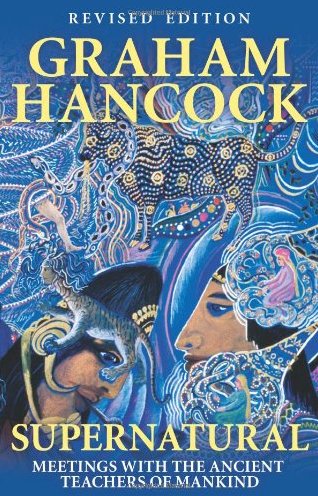
When I was reading Graham Hancock’s book, Supernatural: Meetings With the Ancient Teachers of Mankind, he talked about the hallucinogenic vine called ayahuasca. The name means “Vine of the Soul” or “Vine of the Dead,” and shamans in Amazonia have been using it since way the hell back in order to make contact with the ancestors. The drug derived from this plant is illegal in the U.S. and Britain, but in Amazonian countries it is protected under the laws of religious freedom as it is integral to the religious practice in many indigenous cultures.

Hallucinogenic plants are used for similar purposes in all cultures around the world, but what I found so fascinating about ayahuasca is that the leaves of the plant are rich in a chemical—Dimethyltryptamine (DMT)—that the human brain secretes naturally in minute quantities. Normally, substances which contain DMT are blocked from absorption into the body by a naturally-occurring enzyme in the human stomach. The vine part of the ayahuasca contains a chemical inhibitor for this enzyme, thus the shamans must cook both leaves and vine together in order for the hallucinogenic effect to happen. This is a fairly arduous process of cooking and layering and recooking that goes on for hours. Anthony Bourdain’s No Reservations episode on Peru features a segment on this process, if you happen to catch it some time. (Good episode—well, except for the guinea pig segment.)

I’m left wondering, first, how the shamans discovered the particular chemical interaction going on here; and, second—as I always wonder in the cases of non-technical societies discovering complex processes for making Thing A become Thing B—how the hell they figured it out in the first place. The shamans say that the plants themselves told them how to do this and what effects would happen. Similar explanations occur in other parts of the world: the gods told us how to do this; the plants did; the spirits whispered in our ear.

Take, for instance, the olive. It takes an ungodly amount of complex processing to take the hard, bitter, inedible nut of the olive tree and soften it so that it is not only deliciously digestible but, more importantly, pliable enough to crush and extract the olive oil. Greek legend maintains that Athena came down from Olympus to clue mortals into this process. Western scientists prefer to say that it must have come about through trial and error.

Even so, that’s pretty mind-boggling. Who was the first person who said, “Gee, I bet this thing that looks, feels, and tastes like a rock would yield a delicious condiment and extremely useful cooking oil if only we put it through a series of brine baths for days on end to soften it up”? Who was the first shaman who said, “Wow, I bet if we take this incredibly foul-tasting vine and pound it for hours until it’s fibrous, then boil it with its leaves and layers of other stuff for hours more that at the end we’ll get one of the foulest-tasting liquids known to human taste buds but a kickass vision of the Otherworld”?

The skeptics would say it occurred because of a series of accidents and was more cause-and-effect than messages from the spirit world. But human ingenuity is still a wondrous thing, is it not, whether or not you prefer the mundane explanation or the talking plant explanation?

Mirrored from Better Than Dead.

pjthompson: (TheSiren)

supernatural

When I was reading Graham Hancock’s book, Supernatural: Meetings With the Ancient Teachers of Mankind, he talked about the hallucinogenic vine called ayahuasca. The name means “Vine of the Soul” or “Vine of the Dead,” and shamans in Amazonia have been using it since way the hell back in order to make contact with the ancestors. The drug derived from this plant is illegal in the U.S. and Britain, but in Amazonian countries it is protected under the laws of religious freedom as it is integral to the religious practice in many indigenous cultures.

Hallucinogenic plants are used for similar purposes in all cultures around the world, but what I found so fascinating about ayahuasca is that the leaves of the plant are rich in a chemical—Dimethyltryptamine (DMT)—that the human brain secretes naturally in minute quantities. Normally, substances which contain DMT are blocked from absorption into the body by a naturally-occurring enzyme in the human stomach. The vine part of the ayahuasca contains a chemical inhibitor for this enzyme, thus the shamans must cook both leaves and vine together in order for the hallucinogenic effect to happen. This is a fairly arduous process of cooking and layering and recooking that goes on for hours. Anthony Bourdain’s No Reservations episode on Peru features a segment on this process, if you happen to catch it some time. (Good episode—well, except for the guinea pig segment.)

I’m left wondering, first, how the shamans discovered the particular chemical interaction going on here; and, second—as I always wonder in the cases of non-technical societies discovering complex processes for making Thing A become Thing B—how the hell they figured it out in the first place. The shamans say that the plants themselves told them how to do this and what effects would happen. Similar explanations occur in other parts of the world: the gods told us how to do this; the plants did; the spirits whispered in our ear.

Take, for instance, the olive. It takes an ungodly amount of complex processing to take the hard, bitter, inedible nut of the olive tree and soften it so that it is not only deliciously digestible but, more importantly, pliable enough to crush and extract the olive oil. Greek legend maintains that Athena came down from Olympus to clue mortals into this process. Western scientists prefer to say that it must have come about through trial and error.

Even so, that’s pretty mind-boggling. Who was the first person who said, “Gee, I bet this thing that looks, feels, and tastes like a rock would yield a delicious condiment and extremely useful cooking oil if only we put it through a series of brine baths for days on end to soften it up”? Who was the first shaman who said, “Wow, I bet if we take this incredibly foul-tasting vine and pound it for hours until it’s fibrous, then boil it with its leaves and layers of other stuff for hours more that at the end we’ll get one of the foulest-tasting liquids known to human taste buds but a kickass vision of the Otherworld”?

The skeptics would say it occurred because of a series of accidents and was more cause-and-effect than messages from the spirit world. But human ingenuity is still a wondrous thing, is it not, whether or not you prefer the mundane explanation or the talking plant explanation?

Mirrored from Better Than Dead.

pjthompson: (Default)

Warning: I’ve been asked by a friend to post an advisory that you might not want to read this just before bedtime.

mummenschanz

Mummenschanz.

A murky borderland exists between folklore, the weird, active imagination, and illness. Many people encounter it when they’re most vulnerable: while sleeping. Or more precisely, when they are just falling asleep or just waking. They feel completely awake and conscious, roused from their drowsiness by some sense of presence and menace. Everything has the crisp edge of consciousness, a hyper-real sense of awareness. Strange occurrences are frequent in this borderland, with scary hags and demons, or aliens, or shadow people populating the bedroom and radiating hostility. At times the monsters are more exotic. Other times, it’s just a feeling of being frozen, unable even to cry out, as something sinister hovers over the bed. As WebMD puts it:

Almost every culture throughout history has had stories of shadowy evil creatures that terrify helpless humans at night. People have long sought explanations for this mysterious sleep-time paralysis and the accompanying feelings of terror.

Science has labeled this phenomena “sleep paralysis syndrome,” and I can attest to the terror of it. Many years ago I went through a phase that lasted over a year. Some people have only one or two incidents in their lifetime, some go through a specific period like I did, others are tormented by it for years, perhaps most of their life.

My roommates and I were living in a “haunted” apartment and we all had odd experiences there, but I was the first to enter the strange borderland and suffered the most intense effects. I’ve often wondered since if I started a psychic contagion, influencing them into weird dreams and the hearing of odd sounds: people in the front room moving furniture around or walking across the hardwood floors of our duplex…even when we knew the people upstairs were out of town and couldn’t be the source of the noise. Sometimes we heard the front door open and close with a solid thunk, but when we rushed into the living room, it was bolted tight, the furniture was where it had been when we went to bed, no one else was in the apartment.

I would often wake up sensing a dark cloud hovering over my bed, something evil reaching tentacles out for me while I lay frozen, panicking. I knew that if I could just get myself to move, just reach out to turn on the light, the menace would disappear, but I couldn’t move, couldn’t even blink, only send up fervent prayers for movement and light. Then, all of a sudden like a bubble bursting, I could move, lunged for the light, shot out of bed, panting with terror.

I can’t emphasize enough how real all of this felt.

A few times I caught a glimpse of a figure I’ve labeled (long after the fact, when I feel safer) the “shadow wench.” She was a shapely woman dressed in a black body stocking that went completely over face and head, every speck of “flesh” covered, giving her a Mummenschanz appearance (only without the comic masks). I could see no eyes, and she was the blackest black I’ve ever seen—no light escaping her, all light absorbed into her. She used to sit in a chair beside my bed. Except there was no chair beside my bed. Unlike the amorphous hovering cloud, I got no sinister sense from her. More like a deep puzzlement and curiosity about me, perhaps a slight sense of alien judgment, as if she examined a specimen. As soon as I moved and turned on the light, she disappeared like all the other phenomena.

Eventually, we moved out of that apartment and went our separate ways. My roommates experienced no more weird things, and I had only one more incidence of sleep paralysis in my new place. Many months later, I was diagnosed with thyroid cancer. The doctor said it had probably been responsible for the emotional rollercoaster I’d been on for the previous couple of years—sweeping swings of emotion that came out of nowhere and bore no relation to the events of my life. Oh, and had I been having odd dreams?

To say the least.

Once the cancerous gland was removed and I was on a stable dose of thyroid hormone, all of that disappeared. I have been cancer-free for many years, and thankfully, sleep paralysis free. The thing is, I never felt sleep paralysis syndrome an adequate explanation for all incursions of the weird in the dark of night. Perhaps the majority of these experiences can be attributed to it, especially where beds or comfy chairs are involved, but sometimes weird invasions occur when they can be corroborated by others. People aren’t always in bed. Sometimes they are in their cars, or reading a book, or sitting around a campfire when the strangeness comes creeping in and about them.

And why did my experiences, and those of my roommates, stop as soon as we left that apartment? Why didn’t they continue in the months before I received treatment for my thyroid cancer? I had very intense, weird dreams after that, but only that one incident at the new place of waking up with something creepy in the room. One last farewell appearance before the carny of odd went permanently on the road. I’m sure there’s a scientific explanation, but I do wonder, and always will. Certainly, I have not stopped having uncanny experiences, but my sleep remains untroubled. Thank the gods.

Mirrored from Better Than Dead.

pjthompson: parker writing (dorothy)

IT WASN’T.

I can almost guarantee you that the person I was referring to doesn’t read this blog or my Twitterfeed.

That post wasn’t really about that person, anyway. It was about me not letting go of something that contributes to the clogging of my creative pipeline. That person wanted to put me in my place and I allowed her to do that. I’m trying to let that go so I can be liberated from that influence. I haven’t quite made it yet because, hey, I’m human, but I’m working on it.

That’s what that post was about.

If you are reading this, I love you and I am grateful for all the help you have given me. Okay?

Mirrored from Better Than Dead.

pjthompson: quotes (quotei)

Random quote of the day:

“Skepticism or debunking often receives the bad rap reserved for activities—like garbage disposal—that absolutely must be done for a safe and sane life, but seem either unglamorous or unworthy of overt celebration….Proper debunking is done in the interest of an alternate model of explanation, not as a nihilistic exercise. The alternate model is rationality itself, tied to moral decency—the most powerful joint instrument for good that our planet has ever known.”

—Stephen Jay Gould, Forward to Why People Believe Weird Things by Michael Shermer

rationality4WP@@@


Disclaimer:  The views expressed in this random quote of the day do not necessarily reflect the views of the poster, her immediate family, Siegfried and Roy, Leonard Maltin, or the Mormon Tabernacle Choir. They do, however, sometimes reflect the views of the Cottingley Fairies.


Mirrored from Better Than Dead.

pjthompson: quotes (quotei)

Random quote of the day:


“The quantum theory of parallel universes is not the problem, it is the solution.  It is not some troublesome, optional interpretation emerging from arcane theoretical considerations.  It is the explanation—the only one that is tenable—of a remarkable counter-intuitive reality.”

—David Deutsch, The Fabric of Reality


Disclaimer:  The views expressed in this random quote of the day do not necessarily reflect the views of the poster, her immediate family, Siegfried and Roy, Leonard Maltin, or the Mormon Tabernacle Choir. They do, however, sometimes reflect the views of the Cottingley Fairies.

Mirrored from Better Than Dead.

pjthompson: (pilgrim)
I haven't kept notebooks all my life, just most of my life. I think I must have gotten the first when I was ten or eleven. Although it was dubbed on the outside "My Diary," I rarely went more than a week with any prototypical diary entries. In fact, it was neatly divided into three or four modest “day” entries per page and I routinely wrote over several days’ worth for each entry. These little books always tended to be more like journals, sometimes filled with activities, but mostly filled with emotional screeds, commentaries on the world, philosophical ramblings. Later, they tended to fill up with bits and pieces of my writing: character sketches, poems, dialog runs, etc., etc.—mixed in with the emotional screeds, commentaries, philosophy. They have mostly been cheap paper-cover books, but once or twice I've bought something really fancy, like this one:

Photobucket


This one cost far more money than rational me wanted to spend, but the excitable part of me had to have it. Or, actually, it had to have the one made of brown leather. Black leather has always had less appeal to me. I kept circling back to the store and fondling that book for weeks, but fortunately, the rational me got the excitable one to wait until the notebook had been marked down and I had a gift certificate. By that time, sadly, all the brown leather ones had sold out—but that did not deter me. I’d obsessed about the damned thing and so I was going to have it. Let's not speak of acquisitiveness gone mad, shall we?

That was a few years ago now and I have never written a word in it. I just can't bring myself to violate those pages with the usual screeds, ramblings, and commentaries. What am I saving it for? I have no idea, but there is sits, beautifully occupying a shelf. Seems a waste, but we're not talking rational processes here. The rational me and the excitable one walk hand-in-hand, but it’s often an uneasy partnership, each pulling hard in the opposite direction.

When I was about thirteen and walking around the back yard of our old house in Venice in a moony state (not at all uncommon in those days), something kept nudging me to go to the little walk space behind the "garage." Garage is a euphemistic term for the structure on the back end of our property. Basically it was a couple of strung together rattletrap sheds which hadn't seen paint since the Trojan War and had a distinct lean to the south. My biodad stored his tools and an inordinate amount of Important Guy Stuff in the larger shed. The smaller shed sometimes held fertilizer and the like for his prodigious garden. Behind this structure was a pathway about five feet wide at the very back end of the property. An enormous wire fence kept the riff raff of the neighborhood (my family) from entering the property on the other side, the Edgemar Dairy.

Dairy is also a euphemistic term, as no actual cows wandered the premises. It was a processing plant and staging area for Edgemar trucks to fill up with ice and cart their loads of milk, cottage cheese, fruit drinks, etc., to stores. An enormous ice-crushing machine sat on the other side of that wire fence and it would start going at about two or three in the morning. (That, and being in the flight path of Santa Monica airport, helped train me to be the talented sleeper that I am to this very day.) The positioning of the ice-crushing machine against the property line was intentional, one in a long series of harassments the dairy management folks concocted in an effort to get us and our neighbor to sell out cheap to them and move. It didn't work. We were made of sterner (and more spiteful) stuff than they imagined. They never did get our property. But that's another story...

So anyway, something urged thirteen-year-old me to go behind the garage, telling me I'd find something special. I'd been back there countless times and the rational was skeptical—but the Believer was game. When I walked this familiar path, what did I spy? A little notebook lying just beside the fence on the dairy side: a cheapie, maybe 4x7, black leatherette, spiral bound. I could reach quite easily under where the wire of the fence didn't quite meet the concrete and pull it to me. It was full of paper, every page blank, and it must not have been there long because it wasn't damp or dirty. Well! The Believer thought I'd been given a Very Special Gift from the universe. The Skeptic (active even at that tender age) thought some schmuck had dropped it in the wee hours while filling his truck up with ice and disturbing my sleep. But I held onto that notebook for years—and kept it as empty as that expensive model. I just could bring myself to violate the pages.

The Believer always seems to be saving these things for that something special that never quite materializes.

This post is really about Skepticism and Belief. )
pjthompson: (mysteries)
I first heard the story of the Green Children of Woolpit many eons ago when a history professor read William of Newburgh's account (one of two contemporary accounts) aloud. It sparkled with great wonder in my imagination and I've been fond of the legend ever since. The story has been featured in many an occult collection, which has made it easy to dismiss in skeptical circles, but something still remains of the prodigious and marvelous: maybe convoluted and misconstrued real events, perhaps the workings of imagination and tale-telling, or even a solid yank upon the long leg of history—but a marvel nonetheless. I hope you enjoy this tale as much as I have over the years.

William of Newburgh's version, circa 1150 AD. )


Ralph of Coggshall's version, circa 1187 AD. )


Read More About It.

Wikipedia has a good article which succinctly covers the facts and the various attempts at rational explanation. There's also an exhaustive amount of information at the Anomalies website.


*I love mysteries of all sorts. I love collecting them and puzzling over them. I propose to post an irregular series of mysteries this year. I propose it, but we'll see if I can accomplish anything like that. Life has proven to be unpredictable in past months, so any promise I make will have to be rather half-baked. Some of these mysteries will be historical, some will be fantastical, others will be more mundane; some may have happened to me or people I know, and some may exist in that land between fact and fiction. I will leave it to you to decide which is which.
pjthompson: (Default)
I've been reading a book for the last couple of months: _Ghost_ by Katherine Ramsland. One reason it's taking me so long to get through it is because, well, it's not much of a book. Just interesting enough to pick it up now and again to read a few more sections, but not so compelling that I'm ripping right through it. It purports to be "nonfiction," relaying how Ms. Ramsland got drawn into the world of ghost-hunting and her explorations of that world. That sounds like an interesting premise, right? Unfortunately, she manages to repeat the same information over and over without ever heading anywhere in particular. It wanders, meanders, drifts, wearing out plenty of shoe leather but never arriving at a destination. And she's always declaiming about wanting to keep her scientific objectivity--but there isn't a hell of a lot of objectivity in evidence. She hypes up the drama promising thunderous revelations...which never quite come off as advertised. Many times, though, there are moments of unintentional humor; instances when Ms. Ramsland comes off as something of a dim bulb with a Ph.D. It mystifies me how some books get into print.

So what's the point of all this besides sour grapes? Well, I have a confession to make. (Isn't that what blogs are for?) Another reason it's taking me so long to read this book is because I'm highly suggestible when it comes to this ghost cr!p. I can't read this book past late afternoon, when dusk starts gathering, because my imagination starts to do a hoodoo dance with me. I expect whangdoodles to slither out of the closet; haints to materialize from out of the gloaming; bogles to go bump in the night with extreme attitude.

Which is not to say I believe in ghosts. Some days I most definitely do not. Like Mark Twain said, "I do not believe in ghosts, but I am afraid of them." I've had just enough creepy, unexplained things happen to me that I've got the notion something's going on, but I don't want to have that notion confirmed--no sirree. I've always been more comfortable with oracles that leave me room for doubt. I don't want absolute confirmation or confrontation. I don't want to *see* anything or hear anything that might rip aside that safe little curtain of rationality. I'm content with the afterimage of presence, the fading smell of manifestation. I reserve a part of my brain for doubt and rational explanations. I need to maintain the ability to retreat there, even if another big part of me gets caught up in the airy-fairyhood, even if another big part of me loves that frisson and seek out things which make my spine rattle with it. But only at a safe remove.

Having a good imagination can be a powerful tool for both good and evil. And I have a brain that is perfectly comfortable with holding irreconcilable ideas within the same skull. Who needs to have a devil on one shoulder, an angel on the other? I've got that pitched battle going on daily in my own twee brain (matinees Sat-Sun). This believer/skeptic thing is just one of my many dichotomies.

It comes down to this: if the universe is stranger than we can imagine, it must be very strange indeed. And if that's the case, anything is possible. And if _that's_ the case, I'd rather not have that confirmed--if it's all the same to you.

Profile

pjthompson: (Default)
pjthompson

December 2025

S M T W T F S
 1234 56
78910111213
14151617181920
21222324252627
28293031   

Syndicate

RSS Atom

Most Popular Tags

Expand Cut Tags

No cut tags
Page generated Apr. 3rd, 2026 11:48 am
Powered by Dreamwidth Studios