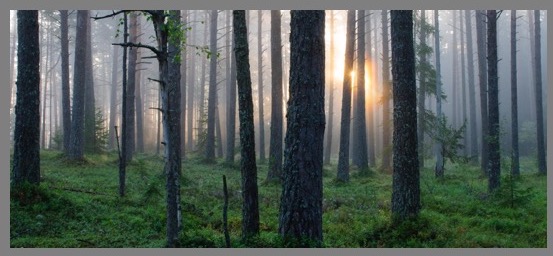
Woods

May. 5th, 2022 04:11 pm
pjthompson: quotes (quotei)
Random quote of the day:

“Have you ever noticed how quiet you get when you go in the woods? It’s almost like you know that God’s there.

—Richard Pryor, Richard Pryor Live in Concert


Disclaimer: The views expressed in this random quote of the day do not necessarily reflect the views of the poster, her immediate family, Desus and Mero, Beyoncé, or the Marine Corps Marching Band. They do, however, sometimes reflect the views of the Cottingley Fairies.

Tree

Apr. 16th, 2020 01:17 pm
pjthompson: quotes (quotei)
Random quote of the day:

“I was once walking through the forest alone. A tree fell right in front of me and I didn’t hear a thing.”

—Steven Wright, I Have A Pony


Disclaimer: The views expressed in this random quote of the day do not necessarily reflect the views of the poster, her immediate family, Key and Peele, Celine Dion, or Sgt. Pepper’s Lonely Hearts Club Band. They do, however, sometimes reflect the views of the Cottingley Fairies.

The trees

Sep. 25th, 2018 04:04 pm
pjthompson: quotes (quotei)

Random quote of the day:

“There are men who walk through the woods and see no trees.”

—Mongolian proverb


Disclaimer: The views expressed in this random quote of the day do not necessarily reflect the views of the poster, her immediate family, Orville and Wilbur, Katy Perry, or the Avengers. They do, however, sometimes reflect the views of the Cottingley Fairies.

The trees

Sep. 25th, 2018 10:02 am
pjthompson: quotes (quotei)

Random quote of the day:

“There are men who walk through the woods and see no trees.”

—Mongolian proverb

Disclaimer: The views expressed in this random quote of the day do not necessarily reflect the views of the poster, her immediate family, Orville and Wilbur, Katy Perry, or the Avengers. They do, however, sometimes reflect the views of the Cottingley Fairies.

Mirrored from Better Than Dead.

pjthompson: (Default)


I was reading an article in the September 2018 issue of Fortean Times (FT370) called “Strange Stories from Southport”—a seaside town in Merseyside, roughly 20 miles north of Liverpool. Most of the stories in this article dealt with sightings of the Old Man of Halsall Moss—an old, possibly drunken, man in antique farmers clothes who is often seen staggering beside the road by passing motorists only to suddenly disappear.

Other people traveling the solitary places around Southport have had timeslips or momentarily driven through a changed landscape. One mother and son experienced a nighttime landscape beneath a crescent moon showering luminous arcs of light down upon the open fields. The streetlights on either side of the road echoed these luminous arcs, as did the headlights of the cars coming from the opposite direction. They passed a car with two ladies inside but when the mother looked in the rearview mirror, the car had completely disappeared, although there was no turn off anywhere nearby. When they returned home by this same road about three hours later, there were no arcs of light and, furthermore, they realized that the streetlights weren’t on either side of the road as they had originally perceived them, but went straight down the middle. They also realized that the crescent moon arcing light had been to the north of them instead of traveling its usual east to west.

Stories like this are a great comfort to me because I’ve had my own impossible sightings, when a mundane trip down a familiar road can turn suddenly…other. Even though I’m certain of what I saw and was fully awake in broad daylight, knowing that you have experienced something you just could not have experienced is deeply unsettling. You gnaw on it for the rest of your life, you return to it again and again, asking yourself how it could have been. And not infrequently, you (I) question your (my) sanity.

But when I read about other normal people seeing scrambled realities I can tell myself that sometimes weird stuff just happens.

Some time back my friends and I were having interesting discussions about timeslips and other warps in reality, sharing personal experiences of our own and of our friends. The next day I received the (then) latest Fortean Times (February 2017, FT 350) which had an article by Jenny Randles (“Timelessness”) on “time travel, close encounters and other ripples in reality.” Being the good Jungian that I am, I recognized a synchronicity and started working on a post—which, alas, got buried by busyness in other areas.

My friend, L. (I have four friends with the first initial of L), told me of a strange encounter she and her then-boyfriend had when camping at a remote site in the Santa Rosa Mountains of California. As they drove along the lonely highway, they came up behind an old jalopy of a truck going slowly up the mountain. It was loaded with people riding in its bed and even though they spent considerable time behind the truck because the road was too narrow for safe passing, the only person in the vehicle who acknowledged their presence was an old guy who stared and laughed and grinned in a kooky kind of way that L. found quite unnerving.

The truck continued up the mountainside, but eventually L. and her boyfriend turned off at the campground. Their car was the only one in the small parking lot in the middle of nowhere. They unloaded their gear and hiked into the remote campsite. When they got there, two women sat on one of the campground picnic tables looking at a fire on a distant range. They didn’t seem unfriendly. They smiled and said something neither L. nor her boyfriend could understand and pointed to the smoke they were watching. Again, L. felt unnerved, but she put it down to having read too much Casteneda. She and her boyfriend hiked into the woods to set up camp but when they next looked at the picnic table, the women were gone. As the night progressed, a feeling of oppression overcame L., like something wanted them gone. She felt as if she was being closed in upon, watched. L. turned to her boyfriend and said, “I think we should leave. Now.” “I think you’re right,” he said. He’d been feeling the same thing. It was the middle of the night, but they packed up in a hurry and left.

Ms. Randles speaks of the “Oz factor” often preceding odd experiences, wherein, for example, a busy road or room suddenly becomes profoundly quiet as the state of consciousness of the percipient changes. Simon Young, writing in FT362 (January 2018—“Introducing the Fairy Census 2014-2017”) says that there are a significant number of these experiences “while people are driving or travelling in a car” or stopped at lay-bys. He also speaks of a profound silence often accompanying this otherness.

In the case of a friend of a friend (another L.), when he was a teen, he was traveling down Roosevelt Boulevard in St. Petersburg, Florida in a car driven by his mother. The road was surrounded by fields and palm scrub, and as he gazed out the window, he was no longer in the car, which had completely disappeared. He was riding a horse and felt certain that he was an Indian. This went on for several minutes before he returned just as suddenly to the car.

Many years later, he decided to teach himself how to drive a stick shift so he borrowed his wife’s car and headed for this selfsame Roosevelt Boulevard because he knew he could drive to the end of it without getting in the way of too many other drivers. The boulevard dead-ended at some piney woods, so he headed in that direction. By the time he got there, it was dark and he came upon a stop sign that he didn’t remember ever seeing before. Not only that, instead of piney woods, the boulevard ended at a T-intersection. He also didn’t remember a road crossing there before, but as it was dark and he was uncertain where it led, he elected to turn around to go back the way he’d come rather than exploring the road. But he was curious, so he drove back the next day in the daylight. There was no stop sign and no road. He and his wife found an old map of the area and on that map, the road he had seen that night clearly appeared. They looked into it and discovered that the road had been created to service a housing development that had never come to pass because of environmental concerns. Even more curious, although the map had shown the road in anticipation of the housing development being built, the road had never actually been constructed. He’s very glad he decided not to drive down that road.

But it’s not just friends and friends of friends…

In December 1992, I gathered some of my loved ones together for our annual Christmas dinner. In the middle of the festivities when everyone was telling stories and laughing, my world came to a standstill. I’ve tried to describe this sensation before and that’s as close as I can come. I was sitting in that room, but outside of it, too. I saw everyone talking, but couldn’t hear them anymore. Inside of me everything had gone completely still, the kind of silence and stillness I’ve never felt before or since. I heard a voice. My impression is that it was deep, but I can’t be sure anymore and I can’t be certain whether it was male or female, but it was a voice of great conviction. It said, “This is the last Christmas you will all spend together like this.” With those words came the utter conviction that one of us would die before the next Christmas. I didn’t know who, but I suspected it was one of my parents. Then it was like the bubble burst and I was back in the room just as before, only trying hard to pretend nothing had happened, to deny what had happened. I told no one about this experience lest they think I was crazy. October rolled around and no one had died so I began to think it was ridiculous. So I finally told someone, my oldest friend, L., and we had a good laugh over my lunacy. Two days later, my father collapsed with an aortal aneurysm and passed away.

For oh so many reasons, my world was never the same after that. As Ms. Randles says, “we scramble to make sense of the scattered fragments of reality and reconstruct the world in a linear way.” It took some work to reconstruct things, but I never returned—didn’t want to return—to the same old linear narrative I’d been living. As Emily Dickinson once said, “Tell the truth, but tell it slant.” She was speaking of the artifice of art, but for me it means that the truth of reality is slant. Or as Simon Young says, “…an inconvenient fact slapping you hard in the face: reality is not as you thought.” Unless we live on the north or south poles, all of us are walking sideways on a globe, held there by gravity. But our brains can’t deal with this version of reality, so we create a level and flat plain, a straight-on world that doesn’t exist. I see the Other as something similar, something that exists alongside us, that we catch momentary glimpses of before our brains wrench us back into our more comfortable time and space.

I have also had my own “seeing things I couldn’t have seen while driving” experience. You can read about it here. (Note: I’ve just realized, looking back at that old post, that it happened the year my mother had her stroke and everything changed utterly for me. Not only that, I wrote the post no more than a week or two before my mother’s stroke.)

As Simon Young notes, “there have been several large-scale population-wide surveys of supernatural and psychic experiences over the past 120 years.” These have shown that as many as a quarter of the population have had these kinds of significant experiences, the kind that “the rest of the population would rather not think about.”

As much as twenty-five percent of the population is an impressive number. Maybe, like me, they just read too many issues of Fortean Times or maybe, just maybe, there are layers and layers of otherness living just beneath the surface of ordinary life.

pjthompson: (Default)

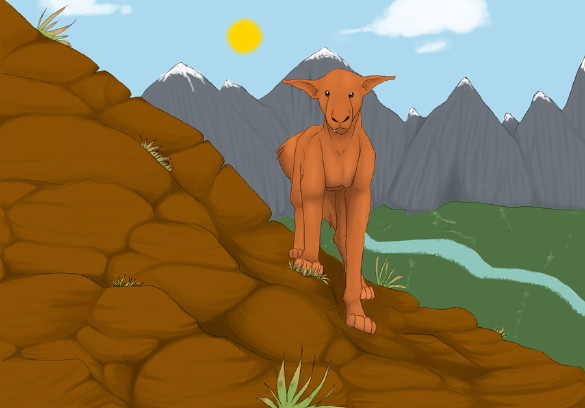
sidehill_gouger_by_jayoen

The Sidehill Gouger by Jayoen at Deviant Art

My uncle and my older cousin called it the sidehill toggler, an infamous creature from Utah legend. It was fearsome, they said, hanging out in the high mountains, and if you encountered one you had no chance of outrunning it because it was fearsome fast. And carnivorous. Well, there was maybe one way to evade it: run in the opposite direction from the way it faced. It might be a little tricky to get by it to run in the opposite direction, but if you went downhill or uphill a bit, you could generally squeak by. See, the sidehill toggler could only run one way on a mountainside and it could only run round and round the same pathway because it had a regular sized leg on one side and a very, very short leg on the other. Which was why it was so impossibly speedy on mountain slopes…in one direction.

Even though I was little, something in the glint in my uncle’s eyes and the way my cousin bit her lower lip made me skeptical. I was made even more skeptical when I asked what it looked like. They hemmed and hawed, but eventually agreed it was a giant flightless bird, bigger than an ostrich—like maybe a cousin of an ostrich or something, only this bird had a gigantic curved and sharp beak that could tear a person limb from limb.

My mom liked nature shows and watched them all the time, I said. I thought for sure something as terrible and strange as this bird would have popped up on one. But no, my uncle said, the government didn’t like people talking about it because it could cause a panic or something and so the sidehill toggler was confined to the remotest mountains in special nature preserves where no one was allowed to go. Lumberjacks were the only ones who ever saw them, and brought the tales home to tell around firesides.

Mom got back from the store at this point and told my uncle and my cousin to stop filling my head with trash. They laughed a lot at that point.

“I knew you were lying,” I told them.

“Not lying,” my Uncle Rupert said. “Storytelling.”

“Well, Francie was lying,” I said. She blushed.

But it turns out that the sidehill toggler is a real thing. Okay, not a real real thing, but not just a story my uncle and cousin made up. It’s a folklore thing. A tall tale thing. One of the things that lumberjacks really did like to tell stories about around firesides. The most common name for this creature is the sidehill gouger, but it has dozens of names, including the rickaboo racker, the sidehill winder, the gyascutus, the sidehill badger, the rackabore, and so on and so on. My uncle and my cousin may have made up the part about it being a giant bird because I haven’t found any other accounts of it looking like that. Although storytellers do disagree about its appearance, sidehill gougers are often described as badger-like, or deer-like (only with sharp teeth and carnivorous tendencies). Apparently, it’s not just Americans who encounter these extraordinary creatures: the French have one called a dahut, and the Scots have a sidehill haggis. Which calls up pictures of a giant stuffed carnivorous sheep’s bladder with legs. But maybe that’s just me.

Folklorist Carol Rose in Giants, Monsters, and Dragons: An Encyclopedia of Folklore, Legend, and Myth says of the Guyascutus and its ilk that they are part of:

the folklore of lumberjacks and forest workers (and later fraudsters) during the eighteenth and nineteenth centuries, especially in Wisconsin and Minnesota in the United States….The creature belongs to a group of monsters affectionately known as the Fearsome Critters, whose exaggerated proportions and activities not only explained the weird noises of the lonely landscape but also provided some amusement at camps.

I hear they have mosquitoes the size of cows out in Wisconsin and Minnesota, too. Or maybe there’s just so many of them in the summertime it feels like you’ve been bitten by a blood-sucking cow or two. Pretty fearsome either way.

Mirrored from Better Than Dead.

pjthompson: (Default)

This is one of those stories where folklore and history intersect, and more compelling for the union.

Some of you may know this haunting song by Alison Krauss:

Some of you may even know it’s based on a true story.

On the morning of April 24, 1856, in the remote and dense forest of Spruce Hollow, Pennsylvania in the Blue Knob region of the Alleghenies near Pavia, Samuel Cox went out hunting for dinner while his wife was distracted with chores. When he returned to the log cabin he’d built for his wife Susannah and their two sons, Joseph, aged 5, and George, aged 6, his frantic wife told him that when she’d looked up from her work the boys had disappeared. She’d been calling their names and searching the area but they never responded to her calls, and she could find no trace of them.

Samuel began a desperate search, but had no better luck. Neighbors were implored for help and within hours nearly two hundred people had joined the search. They scoured the area for days, the numbers of searchers growing to almost one thousand persons. Some came as far as fifty miles to aid the Cox family at a time when traveling through that rugged country was very difficult. A dowser and a local witch were even brought into to help. Nothing—no one could find any trace.

Inevitably, with so many searchers coming up empty, rumors and gossip began to fly. Eventually, even the parents were suspected of murdering their own children, some people going so far as to tear up the floorboards of the cabin and digging up the land around it to search for bodies.

At the height of this rumor-frenzy, a man named Jacob Dibert, living some twelve miles from Spruce Hollow, had a nightmare. In this dream, Jacob saw the search parties looking for the Cox children and saw himself amongst them—though in reality he hadn’t joined them. In the dream, he became separated from the rest and didn’t recognize the part of the forest he moved through, but then he came to a fallen tree and saw a dead deer. Just beyond the deer, he spied a small boy’s shoe, and just beyond that a beech tree lying across a stream. Crossing the stream, he ascended a steep and stony ridge, then down into a ravine. By the roots of a large birch tree with a shattered top, he found the missing boys lying in each others’ arms, dead from exposure.

Shaken by this dream, Jacob at first told only his wife, but it returned to him the next night, and the night after that, so he finally told his brother-in-law, Harrison Whysong, who lived in Pavia. Whysong was skeptical, but he knew the area and knew a ridge that matched Jacob’s description. Jacob was so shaken up that Whysong decided to ease his mind by taking him there. On May 8, they began their search. They found the fallen tree, they found the dead deer, they found the small shoe. They ran for the stony ridge and down into the ravine, towards the roots of that birch tree with the shattered top. They found the two small boys, lying in each others’ arms, dead from exposure.

lost children

The boys were buried in Mt. Union Cemetery. In 1906 on the fiftieth anniversary of the tragedy, the people of Pavia erected a monument. In 2002, it was vandalized, but the good folks from Culp Monumental Works of Schellsburg restored it. C. B. Culp, who founded the company, made the original chiseled marble stone. You can still visit the monument. It’s quite a hike, I understand, and there’s even a geocache there for people who are interested in geocaches. It is rumored to be a place of strange lights and odd occurrences, even to this day.

Sources for this story:

The Lost Children of the Alleghenies
Anomalies: The Pavia Monument
Lost Children of the Alleghenies

*Another irregular series that I will probably keep up with irregularly.

Mirrored from Better Than Dead.

Irony

Sep. 27th, 2011 11:07 am
pjthompson: quotes (quotei)

Pulled from the quote file 9/13/11:

Random quote of the day:

“It’s not by accident that the pristine wilderness of our planet disappears as the understanding of our own inner wild natures fades. It is not so difficult to comprehend why old forests and old women are viewed as not very important resources.”

—Clarissa Pinkola Estes, Women Who Run With the Wolves


Disclaimer: The views expressed in this random quote of the day do not necessarily reflect the views of the poster, her immediate family, Siegfried and Roy, Leonard Maltin, or the Mormon Tabernacle Choir. They do, however, sometimes reflect the views of the Cottingley Fairies.

Mirrored from Better Than Dead.

pjthompson: (Default)
Green Men are found in many cultures. They are commonly a symbol of rebirth and regeneration, the spring greening that inevitably follows the dying of winter.

I'm fascinated with them. I have two of them, one in the back yard garden near the peach tree:

Photobucket

The lovely lady to the left of him is the Roman goddess Flora, and the lady on the right is simply named Ivy. The man himself is cast iron and he is aging gracefully, starting to rust in interesting patterns.

I also have a Green Man inside, in my room:

Photobucket

He's smaller, also made of metal, but I doubt he's copper as the green of him suggests. I believe the "aging" on this one is artificial—but I still think he's rather cool. Here's the grouping in which he sits, right next to Freya and the prayer sticks, which you may remember from past entries:

Photobucket

Truth is, I'd have more Green Men if I had the space and money (so it's probably a good thing that I don't). I like the ones with serious and slightly sinister expressions, and I like them to be made of serious natural materials like metal, not these comical cast resin ones that you see here and there and everywhere (though I admit, Flora and Ivy are cast resin). Why am I so fascinated with these Green Man images?

This post is really about Nature. )
pjthompson: (mysteries)
Some of you may know this haunting song by Alison Krauss:


Some of you may even know it's based on a true story.

On the morning of April 24, 1856, in the remote and dense forest of Spruce Hollow, Pennsylvania in the Blue Knob region of the Alleghenies near Pavia, Samuel Cox went out hunting for dinner while his wife was distracted with chores. When he returned to the log cabin he'd built for his wife Susannah and their two sons, Joseph, aged 5, and George, aged 6, his frantic wife told him that when she'd looked up the boys had disappeared. She'd been calling their names and searching the area but they never responded to her calls, and she could find no trace of them.

Samuel commenced a desperate search, but had no better luck. Neighbors were implored for help and within hours nearly two hundred people had joined the search. They scoured the area for days, the numbers of searchers growing to almost one thousand persons. Some came as far as fifty miles to aid the Cox family at a time when traveling through that rugged country was very difficult. A dowser and a local witch were even brought into to help. Nothing—no one could find any trace.

Inevitably, with so many searchers coming up empty, rumors and gossip began to fly. Eventually, even the parents were suspected of murdering their own children, some people going so far as to tear up the floorboards of the cabin and digging up the land around it to search for bodies.

At the height of this rumor-frenzy, a man named Jacob Dibert, living some twelve miles from Spruce Hollow, had a nightmare. In this dream, Jacob saw the search parties looking for the Cox children and saw himself amongst them—though in reality he hadn't joined them. He became separated from the rest and didn't recognize the part of the forest he moved through, but then he came to a fallen tree and saw a dead deer. Just beyond the deer, he spied a small boy's shoe, and just beyond that a beech tree lying across a stream. Crossing the stream, he ascended a steep and stony ridge, then down into a ravine. By the roots of a large birch tree with a shattered top, he found the missing boys lying in each others' arms, dead from exposure.

Shaken by this dream, Jacob at first told only his wife, but it returned to him the next night, and the night after that, so he finally told his brother-in-law, Harrison Whysong, who lived in Pavia. Whysong was skeptical, but he knew the area and knew a ridge that matched Jacob's description. Jacob was so shaken up that Whysong decided to ease his mind by taking him there. On May 8, they began their search. They found the fallen tree, they found the dead deer, they found the small shoe. They ran for the stony ridge and down into the ravine, towards the roots of that birch tree with the shattered top. They found the two small boys, lying in each others' arms, dead from exposure.

lost children


The boys were buried in Mt. Union Cemetery. In 1906 on the fiftieth anniversary of the tragedy, the people of Pavia erected a monument. In 2002, it was vandalized, but the good folks from Culp Monumental Works of Schellsburg restored it. C. B. Culp, who founded the company, made the original chiseled marble stone. You can still visit the monument. It's quite a hike, I understand, and there's even a geocache there for people who are interested in geocaches.

Sources for this story:

The Lost Children of the Alleghenies
Anomalies: The Pavia Monument
Lost Children of the Alleghenies

Forest

Apr. 8th, 2008 11:57 am
pjthompson: (Default)
Random quote of the day:


"You can only go halfway into the darkest forest; then you are coming out the other side."

—Chinese proverb


Illustrated version. )

Profile

pjthompson: (Default)
pjthompson

December 2025

S M T W T F S
 1234 56
78910111213
14151617181920
21222324252627
28293031   

Syndicate

RSS Atom

Most Popular Tags

Expand Cut Tags

No cut tags
Page generated Feb. 11th, 2026 08:47 am
Powered by Dreamwidth Studios