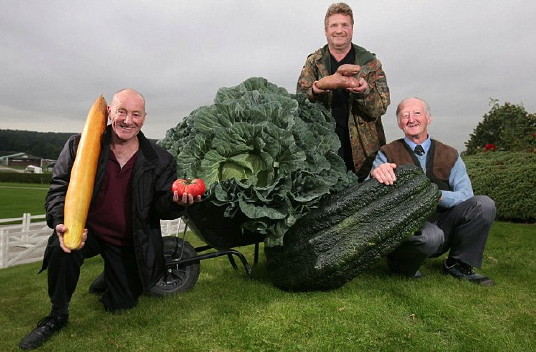
You’ve heard about the giant cabbages once grown in the poor, sandy soil of Findhorn, Scotland? Some people believe that was made possible by the intercession of nature spirits who, in conjunction with the mystic, Dorothy Maclean, wanted to demonstrate to the world what was possible when humankind cooperated with the spirits who ruled the natural world. In fact, the Findhorn Foundation website still tells the story:
Dorothy discovered she was able to intuitively contact the overlighting spirits of plants – which she called angels, and then devas – who gave her instructions on how to make the most of their fledgling garden. She and Peter translated this guidance into action, and with amazing results. From the barren sandy soil of the Findhorn Bay Caravan Park grew huge plants, herbs and flowers of dozens of kinds, most famously the now-legendary 40-pound cabbages.
But where does this notion of nature spirits as guardians and helpmeets of plants come from? It’s an important question because it underlies much of the philosophy of the New Age movement. However, it turns out to be a pastiche of things taken from here and there.
Once, long ago, in a post from 2012, Dr. Beachcombing of Dr. Beachcombing’s Bizarre History Blog wondered if this popular contemporary notion of nature spirits was a survival of old folklore beliefs or merely a modern interpretation. (It’s a interesting post. You should read it.) None of his correspondents (myself included) came up with what you would call conclusive proof that this was a belief of the common folk, or that it had anything like a long history in traditional magics. In fact, it was probably a belief amongst scholarly occultists rather than something a local cunning man or woman might adhere to.
Owen Davies in Popular Magic: Cunning-folk in English History explains this divide between folk magic and philosophical magic:
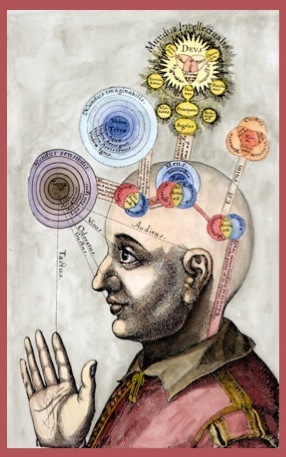
In the historiography of magic a distinction has usually been made between high or learned magic and low or folk magic. Learned magic is generally defined by its sophisticated theoretical, philosophical and ceremonial structure. It can be further broken down into two main categories, demonic and natural….Natural magic was considered by many intellectuals to be a branch of the sciences, as it dealt with the occult powers within nature. In our period [15th c. onward] it was primarily influenced by neoplatonism, which held that the universe was suffused and ruled by a hierarchy of spirits. All matter was interconnected by these spiritual influences, and sympathetic relationships governed all matter. Stars and planets possessed evil and good aspects, and radiated their benign or malign influence upon the earth like ripples across water….
Low, popular, or folk magic is usually characterised as a rich medley of indigenous beliefs, practices and rituals, some of them dating back to Anglo-Saxon times, perhaps even earlier, perpetuated largely through oral transmission. The use of “low” does not necessarily indicate that this type of magic was confined to the “low” elements of society, but those who employed it had no lofty pretensions about what they were doing….
Furthermore, there were specific individuals who straddled the worlds of both learned and low magic, and who were consequently thought to have more knowledge of the occult than those around them: these people were cunning-folk.
(This is a good book. You should read it, as well.)
Eileen and Peter Caddy, the founders of the Findhorn community along with Dorothy Maclean, were influenced by Rosicrucianism, which was strongly influenced by Neoplatonism. So it’s not a far stretch to say that their beliefs—and much of New Age philosophy—come from that root stock rather than folk beliefs.
W. Y. Evans Wentz (himself highly influenced by Theosophy, another Neoplatonist offshoot) says in The Fairy Faith in Celtic Countries (1911):
In the positive doctrines of mediaeval alchemists and mystics, e.g. Paracelsus and the Rosicrucians, as well as their modern followers, the ancient metaphysical ideas of Egypt, Greece, and Rome find a new expression; and these doctrines raise the final problem—if there are any scientific grounds for believing in such pygmy nature-spirits as these remarkable thinkers of the Middle Ages claim to have studied as being actually existing in nature….
All these Elementals, who procreate after the manner of men, are said to have bodies of an elastic half-material essence, which is sufficiently ethereal not to be visible to the physical sight, and probably comparable to matter in the form of invisible gases. Mr. W. B. Yeats has given this explanation:—’Many poets, and all mystic and occult writers, in all ages and countries, have declared that behind the visible are chains on chains of conscious beings, who are not of heaven but of earth, who have no inherent form, but change according to their whim, or the mind that sees them. You cannot lift your hand without influencing and being influenced by hordes. The visible world is merely their skin….’ [From Yeats’ Irish Fairy Tales and Folk-Tales]
Wentz again three paragraphs on:
And independently of the Celtic peoples there is available very much testimony of the most reliable character from modern disciples of the mediaeval occultists, e.g. the Rosicrucians, and the Theosophists, that there exist in nature invisible spiritual beings of pygmy stature and of various forms and characters, comparable in all respects to the little people of Celtic folk-lore.
I find myself imagining some practitioner of the old folkways listening to all this and saying to his or herself, “La di da, la di da,” if not laughing outright. There is nothing inherently wrong with these high blown sentiments, with Theosophy or Rosicrucianism or New Ageism, any more than there is something wrong with the “lower,” more practically-minded folk traditions. But they are clearly different streams fed from the big, muddy river of magics, and wading in one does not necessarily tell you anything about wading in the other.
Mirrored from Better Than Dead.
![[personal profile]](https://www.dreamwidth.org/img/silk/identity/user.png)