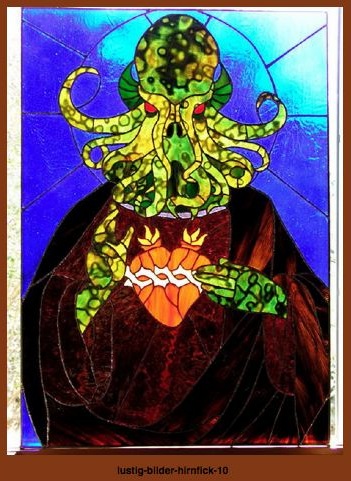
Waking

Jul. 31st, 2019 12:39 pm
pjthompson: quotes (quotei)
Random quote of the day:

“The greatest art symbolizes not those things that we have observed so much as those things that we have experienced, and when the imaginary saint or lover or hero moves us most deeply, it is the moment when he awakens within us for an instant our own heroism, our own sanctity, our own desire.”

—W. B. Yeats, Samhain: 1905 from The Collected Works, Vol. VIII


Disclaimer: The views expressed in this random quote of the day do not necessarily reflect the views of the poster, her immediate family, Key and Peele, Celine Dion, or Sgt. Pepper’s Lonely Hearts Club Band. They do, however, sometimes reflect the views of the Cottingley Fairies.

No saints

Jan. 25th, 2018 09:56 am
pjthompson: quotes (quotei)
Random quote of the day:

“In this yogi-ridden age, it is too readily assumed that ‘non-attachment’ is not only better than a full acceptance of earthly life, but that the ordinary man only rejects it because it is too difficult: in other words, that the average human being is a failed saint. It is doubtful whether this is true. Many people genuinely do not wish to be saints, and it is probable that some who achieve or aspire to sainthood have never felt much temptation to be human beings.”

—George Orwell, “Reflections on Gandhi”


Disclaimer: The views expressed in this random quote of the day do not necessarily reflect the views of the poster, her immediate family, Lucy and Ethel, Justin Bieber, or the Kardashian Klan. They do, however, sometimes reflect the views of the Cottingley Fairies.
pjthompson: (Default)
Random quote of the day:

“Saints should always be judged guilty until they are proved innocent.”

—George Orwell, “Reflections of Gandhi”


Disclaimer: The views expressed in this random quote of the day do not necessarily reflect the views of the poster, her immediate family, Lucy and Ethel, Justin Bieber, or the Kardashian Klan. They do, however, sometimes reflect the views of the Cottingley Fairies.
pjthompson: quotes (quotei)

Random quote of the day:

“What is a saint? A saint is someone who has achieved a remote human possibility. It is impossible to say what that possibility is. I think it has something to do with the energy of love.”

—Leonard Cohen, Beautiful Losers

philomena4WP@@@ 

Disclaimer: The views expressed in this random quote of the day do not necessarily reflect the views of the poster, her immediate family, Siegfried and Roy, Leonard Maltin, or the Mormon Tabernacle Choir. They do, however, sometimes reflect the views of the Cottingley Fairies.

Mirrored from Better Than Dead.

pjthompson: (TheSiren)

saint anthony abbot meets st paul the hermit by petrus agricola-sm
 

St. Anthony Abbot Meets St. Paul the Hermit by Petrus Agricola
I admit to enjoying a bit of hagiography now and then—not the sanitized (sanctified?) versions of the Catholic Church online, but the older stuff, full of the outlandish and miraculous, from the early and Medieval church. Some really interesting oddments there.

One of my favorite passages is from St. Jerome’s Life of Paulus the First Hermit, translated by W. H. Freemantle, 1893 (the spelling is Freemantle’s).

St. Antony is living in the desert of the Thebaid region of ancient Egypt and he’s thinking he’s a pretty righteous monk, a near-perfect specimen of hermit. But then in the deep of the night, God says to him, “Nuh-uh, there’s this other dude named Paulus that blows you out of the water. Or the desert, as the case may be.” Maybe God didn’t express it in quite that way, but Antony gets the message and nothing will do but he has to seek out Paulus. Now, Paulus is a hundred and one at this point, Antony is ninety-five, but Antony is determined to make this arduous trek anyway. He doesn’t know where Paulus abides, but has faith that the Lord will lead him there.

So, he’s trekking and he’s trekking and as he’s standing out in the noontide sun wondering which way to go next and he says…

“I believe in my God: some time or other He will shew me the fellow-servant whom He promised me.” He said no more. All at once he beholds a creature of mingled shape, half horse half man, called by the poets Hippocentaur. At the sight of this he arms himself by making on his forehead the sign of salvation, and then exclaims, “Holloa! Where in these parts is a servant of God living?” The monster after gnashing out some kind of outlandish utterance, in words broken rather than spoken through his bristling lips, at length finds a friendly mode of communication, and extending his right hand points out the way desired. Then with swift flight he crosses the spreading plain and vanishes from the sight of his wondering companion. But whether the devil took this shape to terrify him, or whether it be that the desert which is known to abound in monstrous animals engenders that kind of creature also, we cannot decide.

Antony was gob-smacked, as you can imagine, but he went in the direction indicated.

Before long in a small rocky valley shut in on all sides he sees a mannikin with hooted snout, horned forehead, and extremities like goat’s feet. When he saw this, Antony like a good soldier seized the shield of faith and the helmet of hope: the creature none the less began to offer him the fruit of the palm tree to support him on his journey and as it were pledges of peace. Antony perceiving this stopped and asked who he was. The answer he received from him was this:

“I am a mortal being and one of the inhabitants of the Desert whom the Gentiles deluded by various forms of error worship under the names of Fauns, Satyrs and Incubi. I am sent to represent my tribe. We pray you in our behalf to entreat the favour of your Lord, and ours, who, we have learnt, came once to save the world, and ‘whose sound has gone forth into all the earth.’”

As he uttered such words as these, the aged traveller’s cheeks streamed with tears, the marks of his deep feeling, which he shed in the fulness of his joy. He rejoiced over the Glory of Christ and the destruction of Satan, and marvelling all the while that he could understand the Satyr’s language, and striking the ground with his staff, he said,

“Woe to thee, Alexandria, who instead of God worshippest monsters! Woe to thee, harlot city, into which have flowed together the demons of the whole world! What will you say now? Beasts speak of Christ, and you instead of God worship monsters.”

He had not finished speaking when, as if on wings, the wild creature fled away.

Can you blame it? He asks for a blessing and a good word put in for him and his kind to God and he gets a screed. But lest anyone’s skepticism assert itself over this encounter, St. Jerome hastens to add:

Let no one scruple to believe this incident; its truth is supported by what took place when Constantine was on the throne, a matter of which the whole world was witness. For a man of that kind was brought alive to Alexandria and shewn as a wonderful sight to the people. Afterwards his lifeless body, to prevent its decay through the summer heat, was preserved in salt and brought to Antioch that the Emperor might see it.

He was alive, but apparently that encounter didn’t go so well for this poor, assaulted then salted being.

Antony and Paulus do hook up eventually, though Paulus seems pretty eager to send this weeping and screeding old guy on an errand so he can die in peace. You can read the whole story here.

Mirrored from Better Than Dead.

pjthompson: quotes (quotei)

Random quote of the day:

“Excess in love, indeed the only desirable, belongs to saints. Societies, they exude excess only in hatred. This is why one must preach to them an intransigent moderation.”

—Albert Camus, Notebooks 1951-1959, tr. Ryan Bloom

saints4WP@@@

Disclaimer:  The views expressed in this random quote of the day do not necessarily reflect the views of the poster, her immediate family, Siegfried and Roy, Leonard Maltin, or the Mormon Tabernacle Choir. They do, however, sometimes reflect the views of the Cottingley Fairies.

Mirrored from Better Than Dead.

pjthompson: quotes (quotei)

Random quote of the day:

“Biographers generally believe it is easy to be a ‘monster.’ It is even harder than being a saint.”

—Colette, Lettres à ses pairs

monster4WP@@@


Disclaimer:  The views expressed in this random quote of the day do not necessarily reflect the views of the poster, her immediate family, Siegfried and Roy, Leonard Maltin, or the Mormon Tabernacle Choir. They do, however, sometimes reflect the views of the Cottingley Fairies.


Mirrored from Better Than Dead.

Saint Hood

May. 2nd, 2011 09:20 am
pjthompson: quotes (quotei)

Random quote of the day:


“Since…sainthood is quite difficult to achieve, it makes more sense to seek enlightenment through following the path of sin and degradation.  It’s a great circle—when you get all the way down it’s identical to all the way up.  Each path leads to the same direction.”

—John Levitt, Dog Days


Disclaimer:  The views expressed in this random quote of the day do not necessarily reflect the views of the poster, her immediate family, Siegfried and Roy, Leonard Maltin, or the Mormon Tabernacle Choir. They do, however, sometimes reflect the views of the Cottingley Fairies.

Mirrored from Better Than Dead.

pjthompson: (lilith)

Thanks to Lady Lavona’s Cabinet of Curiosities for sharing it on her blog.


Sisters of the Cross of Shame
by Dana Burnet (1888)

The Sisters of the Cross of Shame,
They smile along the night;
Their houses stand with shuttered souls
And painted eyes of light.

Their houses look with scarlet eyes
Upon a world of sin;
And every man cries, “Woe, alas!”
And every man goes in.

The sober Senate meets at noon,
To pass the Woman’s Law,
The portly Churchmen vote to stem
The torrent with a straw.

The Sister of the Cross of Shame,
She smiles beneath her cloud—
(She does not laugh till ten o’clock,
And then she laughs too loud.)

And still she hears the throb of feet
Upon the scarlet stair,
And still she dons the cloak of shame
That is not hers to wear.

The sons of saintly women come
To kiss the Cross of Shame;
Before them, in another time,
Their worthy fathers came.…

And no man tells his son the truth,
Lest he should speak of sin;
And every man cries, “Woe, alas!”
And every man goes in.

Mirrored from Better Than Dead.

pjthompson: (Default)
Random quote of the day:


"Fortune-telling is often associated with carnivals, gypsies, and fraud. Yet many saints have had the gifts of prophecy and of knowing human hearts. Do fraud and sainthood have something in common?"

—George P. Hansen, The Trickster and the Paranormal


Illustrated version. )


Disclaimer: The views expressed in this random quote of the day do not necessarily reflect the views of the poster, her immediate family, Siegfried and Roy, Leonard Maltin, or the Mormon Tabernacle Choir. They do, however, sometimes reflect the views of the Cottingley Fairies.
pjthompson: (Default)
Random quote of the day:


"We must cherish the selves that flower in us as lovingly as an author husbands his characters. Be they saints or wastrels, tigers or lizards, we must admit them all the same, rather than keep them in exile! For who else will love them if we do not?"

—Alison Fell, The Pillow Boy of Lady Onogoro


Illustrated vision. )

Quietude

Feb. 17th, 2006 03:53 pm
pjthompson: (Default)
When we were in Bodmin we went to a restaurant called La Providence. It was a slow night and the chef, a native who'd gone to London and done the restaurant business there for several years before returning home, came out to talk with us. He suggested several places he thought we'd enjoy visiting. One place he mentioned was the Temple Church out on Bodmin Moor. Actually, the church is St. Catherine's at Temple, a small village, but everyone calls it the Temple Church. It was founded by the Knights Templar, abandoned in the Eighteenth Century, restored in the late 19th, and sits now in a small, green valley. We decided to visit it before leaving Cornwall for the cottage we'd rented in Somerset.

Of all the sweet little churches we visited on our trip, this was by far my favorite. So much love surrounded it, from the villagers who lovingly kept it up, to the peace of the churchyard. It's a tiny cruciform structure, but has lovely stained glass windows. They look plain from the outside but blaze with color inside the church—because they were designed not for folks to appreciate from outside, but to enhance worship on the inside.

It had no pews—just simple wooden chairs before the altar, and an ancient stone baptismal font crowded against one wall with a glorious stained glass window above. St. Francis? A saint with birds flying all around him and the words beneath, He prayeth well who loveth well/Both man and bird and beast.

So much spirit there, so much sense of something beyond the human occupants of the place, so much peace and quietude. Truly a place that renewed the spirit.

The Temple Church )

Profile

pjthompson: (Default)
pjthompson

December 2025

S M T W T F S
 1234 56
78910111213
14151617181920
21222324252627
28293031   

Syndicate

RSS Atom

Most Popular Tags

Expand Cut Tags

No cut tags
Page generated Apr. 4th, 2026 03:02 pm
Powered by Dreamwidth Studios