pjthompson: (Default)

It’s taken me a long time to realize there are people who love to read but who don’t give a damn about how a thing is written. Yeah, I know, should have been obvious with one browse of bestseller books—but, somehow, the concrete realization of this fact  managed to elude me. Of course, not all bestsellers are badly written. Many are quite well written, in fact. But now and then someone comes along like Stieg Larsson or Dan Brown or Stephanie Meyer or E. L. James who are really atrocious at narrative but still manage to concoct a compelling story and capture that certain something in the zeitgeist that has people flocking to them.

Full disclosure: I am again attempting to read Stieg Larsson’s Girl With the Dragon Tattoo, and this time it seems to be sticking, but I have bounced off Larsson and these other writers. I probably won’t try the others again as there seem to be diminishing returns and too many other things I’d rather read. The thing is, as I have been struggling with my own writing, I have also been struggling with my ability to read fiction. I keep bouncing off of books, even well-written ones, even those by old favorites, and I’ve been longing to become immersed in something. I’m far enough past Larsson’s tell-not-show and long infodump opening that the mystery of Tattoo has had a chance to hook me, so I may actually finish this book. No guarantees, though. It’s been the first part of December since I finished anything, even rereads of old favorites. (The last was Deborah Harkness’s Times Convert, the follow-on book to her All Souls Trilogy. It was meh, but I’d loved the other books and wanted to catch up on the characters.)

My writing and my fiction reading have always been connected. One feeds the other, even if what I’m reading has nothing to do with what I’m writing. Being immersed in someone else’s world for a time helps stimulate the mystic place in my brain where my own singing starts. I can’t help thinking that if I cure one symptom it might help cure the other.

I’m still writing almost every day, and it’s still mostly like pulling teeth, but I do plant butt in chair. Most days it isn’t much more than 500 or so words. Some days I’m blessed by 1000 or so. Today, all I managed was 250. But the important part is sitting my butt in the chair, opening the file, and doing something.

So, readers who don’t care how a thing is written. It’s all good. People should like what they like regardless of nerds like me who care about those things. I once had a friend who absolutely refused to read when he was younger, even though it caused him problems in school. He was a bright, imaginative, funny fellow but he just hated reading. Then one day when he was in high school a perceptive teacher shoved a science fiction book into his hands. He was intrigued by the premise and started to read. From that moment on, he became a voracious reader of science fiction and fantasy. He always had a book in his hands. He did confess to me, though, that he often skipped the descriptive parts and dialogue tags and read just the dialogue so he could get through the story faster.

And therein hangs a tale: there are many people like him. Not only do they not care how a thing is written, they want to get through the story as fast as possible to find out what happens. No savoring. They don’t really care about “the art of story,” that immersive feel of a book. It’s a mystery to me why they read at all—but again, that’s not for me to decide. People should be allowed to like what they like and how they like it, and no one—well-meaning nerd, politicizing authors, crusading literati, anyone—has the right to tell them otherwise.

There are no shoulds in reading. Only what gets you through the night. And the book.


pjthompson: (lilith)

It’s taken me a long time to realize there are people who love to read but who don’t give a damn about how a thing is written. Yeah, I know, should have been obvious with one browse of bestseller books—but, somehow, the concrete realization of this fact  managed to elude me. Of course, not all bestsellers are badly written. Many are quite well written, in fact. But now and then someone comes along like Stieg Larsson or Dan Brown or Stephanie Meyer or E. L. James who are really atrocious at narrative but still manage to concoct a compelling story and capture that certain something in the zeitgeist that has people flocking to them.

Full disclosure: I am again attempting to read Stieg Larsson’s Girl With the Dragon Tattoo, and this time it seems to be sticking, but I have bounced off Larsson and these other writers. I probably won’t try the others again as there seem to be diminishing returns and too many other things I’d rather read. The thing is, as I have been struggling with my own writing, I have also been struggling with my ability to read fiction. I keep bouncing off of books, even well-written ones, even those by old favorites, and I’ve been longing to become immersed in something. I’m far enough past Larsson’s tell-not-show and long infodump opening that the mystery of Tattoo has had a chance to hook me, so I may actually finish this book. No guarantees, though. It’s been the first part of December since I finished anything, even rereads of old favorites. (The last was Deborah Harkness’s Times Convert, the follow-on book to her All Souls Trilogy. It was meh, but I’d loved the other books and wanted to catch up on the characters.)

My writing and my fiction reading have always been connected. One feeds the other, even if what I’m reading has nothing to do with what I’m writing. Being immersed in someone else’s world for a time helps stimulate the mystic place in my brain where my own singing starts. I can’t help thinking that if I cure one symptom it might help cure the other.

I’m still writing almost every day, and it’s still mostly like pulling teeth, but I do plant butt in chair. Most days it isn’t much more than 500 or so words. Some days I’m blessed by 1000 or so. Today, all I managed was 250. But the important part is sitting my butt in the chair, opening the file, and doing something.

So, readers who don’t care how a thing is written. It’s all good. People should like what they like regardless of nerds like me who care about those things. I once had a friend who absolutely refused to read when he was younger, even though it caused him problems in school. He was a bright, imaginative, funny fellow but he just hated reading. Then one day when he was in high school a perceptive teacher shoved a science fiction book into his hands. He was intrigued by the premise and started to read. From that moment on, he became a voracious reader of science fiction and fantasy. He always had a book in his hands. He did confess to me, though, that he often skipped the descriptive parts and dialogue tags and read just the dialogue so he could get through the story faster.

And therein hangs a tale: there are many people like him. Not only do they not care how a thing is written, they want to get through the story as fast as possible to find out what happens. No savoring. They don’t really care about “the art of story,” that immersive feel of a book. It’s a mystery to me why they read at all—but again, that’s not for me to decide. People should be allowed to like what they like and how they like it, and no one—well-meaning nerd, politicizing authors, crusading literati, anyone—has the right to tell them otherwise.

There are no shoulds in reading. Only what gets you through the night. And the book.


Mirrored from Better Than Dead.

pjthompson: quotes (quotei)

Random quote of the day:

“In writing, punctuation plays the role of body language. It helps readers hear you the way you want to be heard.”

—Russell Baker, “How to Punctuate,” Ebony, November 1985


Disclaimer: The views expressed in this random quote of the day do not necessarily reflect the views of the poster, her immediate family, Lucy and Ethel, Justin Bieber, or the Kardashian Klan. They do, however, sometimes reflect the views of the Cottingley Fairies.


pjthompson: quotes (quotei)

Random quote of the day:

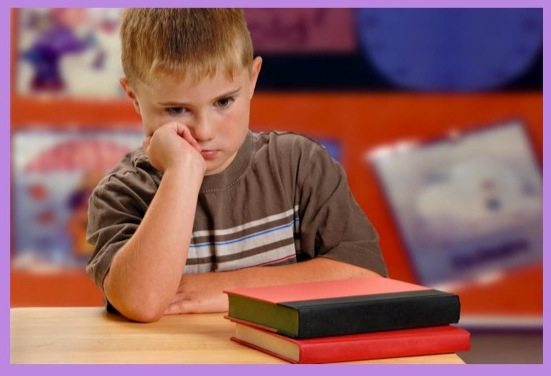
“Trust your reader. Not everything needs to be explained. If you really know something, and breathe life into it, they’ll know it, too.”

—Esther Freud, quoted in Write, ed. Claire Armitstead for Guardianbooks

explaining4WP@@@

Disclaimer: The views expressed in this random quote of the day do not necessarily reflect the views of the poster, her immediate family, Siegfried and Roy, Leonard Maltin, or the Mormon Tabernacle Choir. They do, however, sometimes reflect the views of the Cottingley Fairies.

Mirrored from Better Than Dead.

Ponder

Oct. 28th, 2014 10:25 am
pjthompson: quotes (quotei)

Random quote of the day:

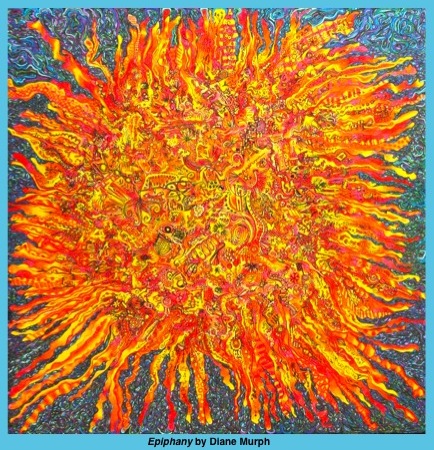
“The words of the writer act as a catalyst in the mind of the reader, inspiring new insights, associations, and perceptions, sometimes even epiphanies.”

—Nicholas Carr, The Shallows

 epiphany4WP@@@

Disclaimer: The views expressed in this random quote of the day do not necessarily reflect the views of the poster, her immediate family, Siegfried and Roy, Leonard Maltin, or the Mormon Tabernacle Choir. They do, however, sometimes reflect the views of the Cottingley Fairies.

Mirrored from Better Than Dead.

Plotting

Jul. 17th, 2014 12:17 pm
pjthompson: quotes (quotei)

Random quote of the day:

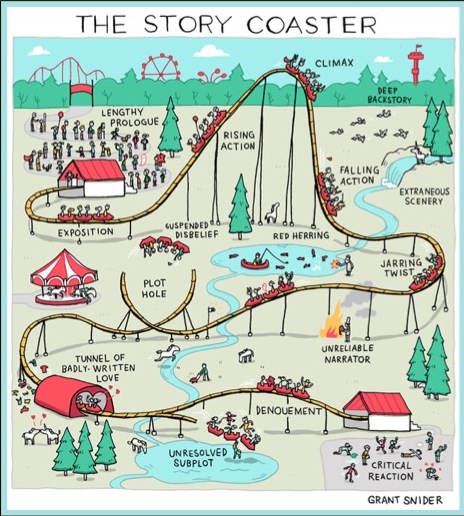
“I don’t praise plots as accurate representations of life, but as ways to keep readers reading….When you exclude plot, when you exclude anyone’s wanting anything, you exclude the reader, which is a mean-spirited thing to do.”

—Kurt Vonnegut, interview, The Paris Review, Issue 69, Spring 1977

 plot4WP@@@

Disclaimer: The views expressed in this random quote of the day do not necessarily reflect the views of the poster, her immediate family, Siegfried and Roy, Leonard Maltin, or the Mormon Tabernacle Choir. They do, however, sometimes reflect the views of the Cottingley Fairies.

Mirrored from Better Than Dead.

pjthompson: quotes (quotei)

Random quote of the day:

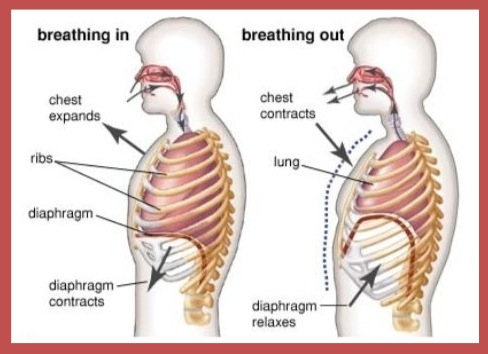
“Poetry, the arts, require feeling—on the part of the reader and observer, as well as the writer. Poetry is participatory, it requires, after feeling, response; and after response it demands movement, action.”

—Jan Freeman, “Breathe-in Experience, Breath-out Poetry”

 breathe4WP@@@

Disclaimer: The views expressed in this random quote of the day do not necessarily reflect the views of the poster, her immediate family, Siegfried and Roy, Leonard Maltin, or the Mormon Tabernacle Choir. They do, however, sometimes reflect the views of the Cottingley Fairies.

Mirrored from Better Than Dead.

Less

Oct. 31st, 2013 10:35 am
pjthompson: quotes (quotei)

Random quote of the day:

“So the writer who breeds
more words than he needs,
is making a chore
for the reader who reads.”

—Dr. Seuss (Theodore Geisel)

 writing4WP@@@


Disclaimer:  The views expressed in this random quote of the day do not necessarily reflect the views of the poster, her immediate family, Siegfried and Roy, Leonard Maltin, or the Mormon Tabernacle Choir. They do, however, sometimes reflect the views of the Cottingley Fairies.


Mirrored from Better Than Dead.

pjthompson: quotes (quotei)

Random quote of the day:

“When a thing has been said and well said, have no scruple: take it and copy it. Give references? Why should you? Either your readers know where you have taken the passage and the precaution is needless, or they do not know and you humiliate them.”

—Anatole France, Anatole France Himself: A Boswellian Record by His Secretary, Jean-Jacques Brousson, tr. John Pollock

 theft4WP@@@


Disclaimer:  The views expressed in this random quote of the day do not necessarily reflect the views of the poster, her immediate family, Siegfried and Roy, Leonard Maltin, or the Mormon Tabernacle Choir. They do, however, sometimes reflect the views of the Cottingley Fairies.


Mirrored from Better Than Dead.

Love

Feb. 19th, 2013 10:41 am
pjthompson: quotes (quotei)

Random quote of the day:

“I try to keep deep love out of my stories because, once that particular subject comes up, it is almost impossible to talk about anything else. Readers don’t want to hear about anything else. They go gaga about love. If a lover in a story wins his true love, that’s the end of the tale, even if World War III is about to begin, and the sky is black with flying saucers.”

—Kurt Vonnegut, interview, The Paris Review, Issue 69, Spring 1977

 love4WP@@@


Disclaimer:  The views expressed in this random quote of the day do not necessarily reflect the views of the poster, her immediate family, Siegfried and Roy, Leonard Maltin, or the Mormon Tabernacle Choir. They do, however, sometimes reflect the views of the Cottingley Fairies.


Mirrored from Better Than Dead.

Read lead

Dec. 17th, 2012 08:57 am
pjthompson: quotes (quotei)


Random quote of the day:


“Today a reader, tomorrow a leader.”

—W. Fusselman, “Slogans for a Library,” The Library, April 1926
(often misattributed to Margaret Fuller)

 reader4WP@@@


Disclaimer:  The views expressed in this random quote of the day do not necessarily reflect the views of the poster, her immediate family, Siegfried and Roy, Leonard Maltin, or the Mormon Tabernacle Choir. They do, however, sometimes reflect the views of the Cottingley Fairies.

Mirrored from Better Than Dead.

pjthompson: quotes (quotei)


Random quote of the day:


“Nobody but a reader ever became a writer.”

—Richard Peck, Invitations to the World: Teaching and Writing for the Young


Disclaimer:  The views expressed in this random quote of the day do not necessarily reflect the views of the poster, her immediate family, Siegfried and Roy, Leonard Maltin, or the Mormon Tabernacle Choir. They do, however, sometimes reflect the views of the Cottingley Fairies.

Mirrored from Better Than Dead.

pjthompson: parker writing (dorothy)

Here’s what I was concerned about on March 23, 2011. I never posted this, don’t remember why now, but came across it while cleaning up my hard drive. This is still something that concerns me, still a valid question to ask myself, but my life is so much more complicated now—and my creative life so much on hold—that it has slipped down the list of worries.

I have no idea when the Dos Lunas saga will see the light of day, although a member of my “fan base” was inquiring about it last week. I use “fan base” ironically for those who don’t get the quotation marks. When I was generating a lot of these DL stories I had a dedicated band of local readers who really liked them and always asked for more. One of them contacted me Friday to find out why I hadn’t e-pubbed them. I explained that time is not my friend these days and why.

Yet I still hope to do just that one of these days.

And so, last year’s concerns:

So. I’ve got this contemporary fantasy novel that I wrote about a mythical Southern California county by the name of Dos Lunas. I’ve been writing about this place for years, a bunch of short stories, and this is the first completed novel (though I’ve started and hope to finish others). Some of the vast cast of characters who inhabit Dos Lunas are Indians from a tribe called the Kintache, a tribe as mythical as the county they inhabit. I have for some time felt rather sensitive on the subject of cultural appropriation, as in this post, for instance. That’s why, with notable exceptions, I’ve tried to write from the outside in, rather than in the POV of my Indian characters. Being a middle-class white girl, I knew I couldn’t do justice to an Indian POV.

Now, I do have one character, JK Montmorency, who is three-quarters Irish and one quarter Indian. He’s been raised mostly as a middle-class white boy, privileged, taking his life for granted, so I’ve felt comfortable writing from his POV. And I’ve written in this special protection for the Kintache, a mother goddess who walled their valley off from the rest of the world through most of their history in order to protect them from the negative currents of history. They missed out on the Holocaust that visited most of the California Indians when the white men invaded their land in the late 18th century. They observe it happening to the other tribes, and they mourn for it, but they have stood somewhat outside the sweep of history. It’s been my hedge, you see, because most of the Dos Lunas stories are semi-comedic. With serious undertones, sure, but comedy-dramas, and the Holocaust isn’t really a suitable subject for comedy (Roberto Benigni and a different Holocaust notwithstanding).

I thought I was writing something I knew, this serio-comic place called Southern California with its goofy and eccentric ways. But like many things that are silly, there’s a vast reservoir of serious, tragic things just below the surface. I thought I was doing a decent job of reflecting that, too, but I’ve never been without doubt about it.

These days doubts are blossoming and growing, like the wildflowers in Dos Lunas, where it’s springtime at this writing. Reading Sherman Alexie, whom I love, has me feeling desperately inauthentic—and even disrespectful. Above all, I want to be respectful to the real suffering of the real native people of California. But I worry about it constantly. I think I’m being respectful, but what if I’m deluded?

I can only keep on, I suppose, and hope others let me know if I’ve stepped in a big pile of dog shit. Hopefully, with the same care and consideration I’ve tried to have in these stories.

Mirrored from Better Than Dead.

pjthompson: parker writing (dorothy)

So, here I am reading a book I’m enjoying immensely. I come upon a chapter in which the writer does something that I know, positively, I have told some young writers in my capacity as a critiquer to never do—switching POV late in a book to one not encountered before. Hey, I’ve been told not to do that myself. The thing is, it works perfectly in this book. As a reader coming upon that shift, I could give a hairy pontiff’s left ear whether the writer has changed POV. I want the information it can give me, I want to know what happens next. And in that moment of realization a great crap paper tide of old critiques fluttered behind me and a voice called across the abyss as it filled with the perfidy of my Writing Thoughts, It doesn’t really matter what you’re supposed to do. The only thing that matters is if you can make what you do work.

Not the first time I’ve had that thought, but it came home especially strong to me today. It may have something to do with rereading one of my older novels—a shuddering experience if ever there is one.

Experience. That’s the key word. The perfidy mentioned above is all about the difference between critiques based on experience (and maybe instinct) and those based on regurgitation. “The Rules” only matter if the story doesn’t work. And here’s the other thing, even if a beta reader or critquer or critic says the story doesn’t work, it still might not matter. That “doesn’t work” can be a question of individual taste, or prejudice, or the sour feeling left in the reader’s stomach by the cafeteria food. If your own gut—not the one turning sour—tells you that something is right, you need to stick by it.

I’m not saying we writers have a magic I’m A Genius Don’t Bother Me With Your Tiny Opinions card. No. If enough people tell you that something isn’t working, you should probably pay attention to that. Be very sure that your gut is talking, telling you a thing is right, and not some fractured corner of your ego.

And even as I’m typing that last paragraph, I’m thinking “Regurgitated Wisdom.” (Because, really, haven’t you heard the one about “if enough people” ad nauseam?) In this case, it happens to be regurgitated with a side of experience, so maybe it’s not total bullshit. Maybe I do sort of know what I’m talking about in this particular instance, as opposed to some of the half-assed critiques I have offered up over the years.

But you never know. Reading my old stuff and realizing how deluded I was about the quality of that work has me stumbling through a funhouse of fractured and distorted opinion. What do I really know?

This is an existential question and has no real answer. The question is the black matter holding the universe together like invisible glue. It is self-contained and complete and needs no critique to make it whole. Sufficient unto the day is the question thereof.

Mirrored from Better Than Dead.

pjthompson: parker writing (dorothy)

I sometimes find myself fretting about my characters and disappointing my readers. Will they be disappointed, I ask myself, in a story where the freak protagonist remains a freak at the end, not magically transformed into someone more attuned to mainstream standards of beauty and social standing? Not young and strong and thin and accepted. A glorious transformation definitely takes place for this particular character I’m thinking about, but it’s all internal—with maybe a glimmer of hope at the end.

For me, as a reader, that’s all I ask: the potential for a better tomorrow. I’m not a fan of unrelieved realism and tragedy and probably would never write that kind of a story. When I was young, I thought it the only way to achieve High Art, but I don’t think that so much anymore. And I’m not so much interested in High Art, either. Just good writing.

This protagonist I’m thinking about is being punished for her sins. Not in the narrowly defined Judeo-Christian sense—as often marketed by fundamentalists and evangelicals. I don’t consider things like who is twanging who in whatever manner to be a sin, so long as everyone is a consenting adult. Sin is a word I reserve for things like murdering, cheating, manipulating, driving companies into bankruptcy, costing thousands of jobs, and the losing/looting of pension funds and properties. Fortunately, my protagonist is not a hedge fund manager or a corporate raider, so the reader may be able to find some sympathy for her.

I have a penchant for complex and not completely sympathetic characters, though. Sometimes that works out, sometimes not. They don’t always act with shining heroism and at times are a bit unstable. Or shitheads. Readers don’t always like them. That’s my fault some of the time (all the time?), because I haven’t written them with sufficient courage. I haven’t had the nerve or the foresight to take an unattractive character (or character trait) to its logical extension. I’ve tried to hedge my bets, gambling that I can charm my way past the unlikeable bits with no diminishment of heroism. I’m afraid to let the reader actively dislike the character even for a short time. You can’t really do that, I don’t think. When someone is being a shithead, you have to let them be one. You do run the risk of alienating some readers, of them putting the story down and never going back, but if you’ve set the story up right, they may stick with you for the rest of the ride to see how things work out.

Or maybe it’s a question of doing the best writing you can, the most interesting characters, and letting them find their audience. A risky stratagem, given the vagaries of the market, but the only honest way I know of approaching this. In real life human beings are often contradictory, selfish, stupid, and yet they’re not bad people. They have the potential for redemption. Those are the people I’m interested in seeing in fiction, too. Oh yeah, a good shiny-smiled hero or heroine is fun to read sometimes, but most of the time I like yellow-toothed protagonists better.

And maybe this, too, is a question of skill. Perhaps the reader can accept their contradictions, their mean streaks, their lashing out if the skill of execution is right. I know I’ve read characters like that and not thrown the book across the room. Take, for example, Chess Putnam in Stacia Kane’s wonderful Downside Ghosts series. Chess is a complete mess, makes stupid and self-destructive decisions, is her own worst enemy—and yet I love her and love reading about her even when I’m cringing hard at what she does. I keep pulling for her to snatch her backside out of the fires she throws it into time and again. She isn’t every reader’s cup of tea, but she’s mine, and wonderfully flawed and makes for compelling reading. So, the point is not to make characters that will be acceptable to every reader, but to make the writing compelling enough that readers can still find something to hold onto. Have I learned that lesson yet? I don’t know—or I know that I haven’t pulled it off all the time. I’m still working on it.

You can’t please all readers all the time. That I know for true. Some will accept the well-written shithead, some never will. That’s a matter of taste. As for the writer writing these complex people, it’s a matter of writing and revising and revising and revising and finding the balance.

Yes, that’s the truth, and the answer to my question, I suppose.

Mirrored from Better Than Dead.

pjthompson: quotes (quotei)

Random quote of the day:


“I can’t write without a reader.  It’s precisely like a kiss—you can’t do it alone.”

—John Cheever, Christian Science Monitor, October 24, 1979


Disclaimer:  The views expressed in this random quote of the day do not necessarily reflect the views of the poster, her immediate family, Siegfried and Roy, Leonard Maltin, or the Mormon Tabernacle Choir. They do, however, sometimes reflect the views of the Cottingley Fairies.

Mirrored from Better Than Dead.

pjthompson: quotes (quotei)

Random quote of the day:


“I don’t think there is a casual reader of Nancy Drew.  There may be casual readers of Proust, but not of Nancy Drew.”

—Fran Lebowitz, quoted in “Nancy Drew: Curious, Independent and Usually Right,” National Public Radio, June 23, 2008


Disclaimer:  The views expressed in this random quote of the day do not necessarily reflect the views of the poster, her immediate family, Siegfried and Roy, Leonard Maltin, or the Mormon Tabernacle Choir. They do, however, sometimes reflect the views of the Cottingley Fairies.

Mirrored from Better Than Dead.

Meme

Mar. 27th, 2011 03:47 pm
pjthompson: (salome)

What do you consider your greatest strength as a writer. Your biggest weakness that you try to overcome? (Listing more than one strength or weakness is cool.)

Feel free to post this question on your blog and link to it in your answer here in the comments. I’ll go first in the comments.

Ahem. My greatest strength, I think, is characterization. I immerse myself totally in my characters, know them backwards, forwards, sideways, upside down, right side up, and crammed into small trunks. Um, so to speak.

Therein also lies one of my greatest weaknesses. Because I know them so well and have developed gobs and tons of gobs and more gobs about their backstory I seem compelled to put in all on the page in my zero drafts. I do weed through this nonsense in the first drafts and get rid of much of it (though my betas can scarce believe that), but I’m often left with a panicked sense of “What if I leave out something important??” Often my poor suffering betas have to kick me hard and tell me to cut some more. I can and do cut quite a lot by the final draft, but it’s often painful.

Therein lies another fault: a tendency not to trust the reader enough to get the characters and subtext and stuff without putting gobs of tons on the page.

I think my sense of humor translates onto the page pretty well, but it isn’t to everyone’s taste. I trust the reader enough to determine that for him or herself. I also trust them to be intelligent and perception people. I don’t write down to them.

I think I have fairly original ideas, except for the ones that have been done to death. I always try to find an oblique angle for the familiar, but that doesn’t often pay off in synopses where you have to reduce ideas ad absurdum.

Did I mention I was not good at reducing things, ad absurdum or just in general?

I do a decent job with the image making, I think.

Except for those times when the scenery takes over the story.

I could go on making lists, as I am an obsessive list maker and an obsessive self-critic, but then I’d be getting into trouble about reducing things again. I’d rather not go there yet again. This post is already, I’m afraid, proof of a sorry theme in my life. as I am an obsessive list maker and an obsessive self-critic, but then I’d be getting into trouble about reducing things again. I’d rather not go there yet again.

Mirrored from Better Than Dead.

pjthompson: parker writing (dorothy)
If by chance you missed this over at Nathan Bransford's blog, Valerie Kemp has written an excellent guest blog on the subject of first chapters.

It's got me thinking of my own first chapters from my finished novels and analyzing why they succeeded or failed. Ms. Kemp makes the excellent point that a first chapter is a promise to the reader about what the rest of the book is going to be like. If it's a high-action chapter, the reader probably expects the rest of the book to be high-action. If it's leisurely and contemplative, then that projects into the reader's mind a much different book.

She makes a number of excellent points which I won't reiterate here—go read the original. But that concept up there in my previous paragraph is one of those should-be-obvious things that often gets overlooked. I know I've overlooked it many times. Sometimes I catch it in the rewrites and make good on that promise to the reader, sometimes not.

I'm thinking in particular of my third novel, Shivery Bones. The first chapter was an action-filled chase scene involving the hero, Ezra. Very in media res, and at the end a burst of unexpected magic. Which was gripping, but not reflective of the story as a whole. Oh yeah, there were actiony bits, more fights and chases, and throughout the book I like to think there were bursts of unexpected magic, but the bulk of the story was much more about the internal journeys of the hero and the heroine, Jolene. She has to learn to love and trust again after terrible tragedy and to accept the natural cycle of life, and Ezra...well, pretty much the same thing, with the added twist of realizing that true love is sometimes about sacrificing your own best interests for the sake of someone else.

None of that was in my first chapter. An early critter said something of the sort to me. "If I didn't know you wrote more contemplative books, I probably wouldn't have read on since this chapter has a lot of adrenaline going on." I ignored that criticism, thinking it beside the point. Very late in the game with this novel, after I'd sent it out many times, I realized the truth of this insight. But it took a rejection from an agent to drive that nail home: "The rest of this book wasn't what I expected from the first chapter."

I wrote a new first chapter which at least had a more contemplative and mysterious vibe to it—centering on Jolene this time rather than Ezra, then transitioning into the action chapter. I think it makes a stronger novel. Unfortunately, during the years I tried selling it with its original first chapter, the market has become saturated with certain tropes used in the story, making it a hard sell, with diminishing chances it would sell. I'd moved on to novels four, five, and six so reluctantly trunked this one.

Would it have fared any better in the market if I'd taken my early betas advice and written a new chapter one back then? Absolutely impossible to say. There are probably other flaw bombs in there that haven't yet exploded in my consciousness. But I do know that writing a new first chapter was the right thing for this book, and the right thing in terms of that implied promise to the reader.
pjthompson: (Default)

Here’s another writing question for you: does every genre story have to start in media res?

I think it may be a genre preference, and I do often enjoy stories that begin with a burst of speed, throwing the reader into the water and forcing them to swim or drown. Certainly, if you’re writing urban fantasy or paranormal romance or space opera or some such sub-genre, you’re probably going to want a quick immersion in plot.

But those aren’t the only kind of stories, and some of my favoritest stories in the world have not begun with a bang and a pop. They’ve built slowly, meandered through interesting character and setting introductions, created magic with language, ever so many lovely loads of language, and eventually, yes eventually, wandered up to the plot and politely shaken hands before throwing it to the mat and beginning the wrestling match.

I’m not sure those kinds of stories are in fashion anymore. But I would be interested to know what you think on the subject. This is another of those personal preference things, and there is no wrong or right answer, I don’t think. There is just what is, and what you think, and what the market will bear.

Or what the reader will bear.

Mirrored from Better Than Dead.

Profile

pjthompson: (Default)
pjthompson

December 2025

S M T W T F S
 1234 56
78910111213
14151617181920
21222324252627
28293031   

Syndicate

RSS Atom

Most Popular Tags

Expand Cut Tags

No cut tags
Page generated Apr. 3rd, 2026 11:45 am
Powered by Dreamwidth Studios